
SEO Jerry

Technical Tracking Case Study Financial Services

Fixing the “Invisible Lead” Problem: Iframe Tracking Without URL Change

How we recovered missing conversion data by engineering a custom Google Tag Manager listener for a high-stakes lead generation infrastructure where form submissions happened entirely inside iframes.

01 Iframe Form 02 GTM Listener 03 Conversion Event

Case Study Outcomes

0% → 100%

Tracking Accuracy

Verified

Meta Lead Events

Activated

Retargeting Signals

Custom event tracking without relying on URL redirects.
The Problem (Why This Was Critical)

The Invisible Conversion Gap

Client Meta Ads par budget spend kar rahe the aur leads bhi generate ho rahi thi, lekin analytics dashboard par “Zero Conversions” show ho raha tha. Yeh sirf ek tracking issue nahi tha — yeh direct optimization aur revenue visibility problem thi.

The Technical Blindspot

Why traditional GTM tracking failed.

01

The form was embedded inside a same-domain iframe.

02

The thank-you page loaded inside the iframe after successful form submission.

03

The main page URL never changed, so the existing parent-page GTM tracking setup did not detect the conversion.

BEFORE THE FIX · TRACKING FAILURE
Form Submitted
Iframe Thank-you
✕ Missed GTM Event

The iframe completed its internal navigation, but the parent page's existing conversion trigger did not fire.

The real challenge: Leads were being generated, but the existing tracking implementation could not connect successful iframe submissions to the conversion events needed for measurement and optimization.

Technical Execution

The Custom Tracking Bridge

Since traditional GTM triggers failed to capture the submissions, we engineered a custom iframe listener system capable of detecting the internal thank-you state without relying on changes to the main page URL or standard parent-page pageview events.

01 PHASE 01

Identifying the Source

The lead generation form was embedded using a same-domain iframe. After successful submission, the thank-you state loaded entirely inside the iframe while the main page URL remained unchanged.

Because the parent page never refreshed or navigated, traditional GTM pageview-based conversion tracking failed to identify the submission.
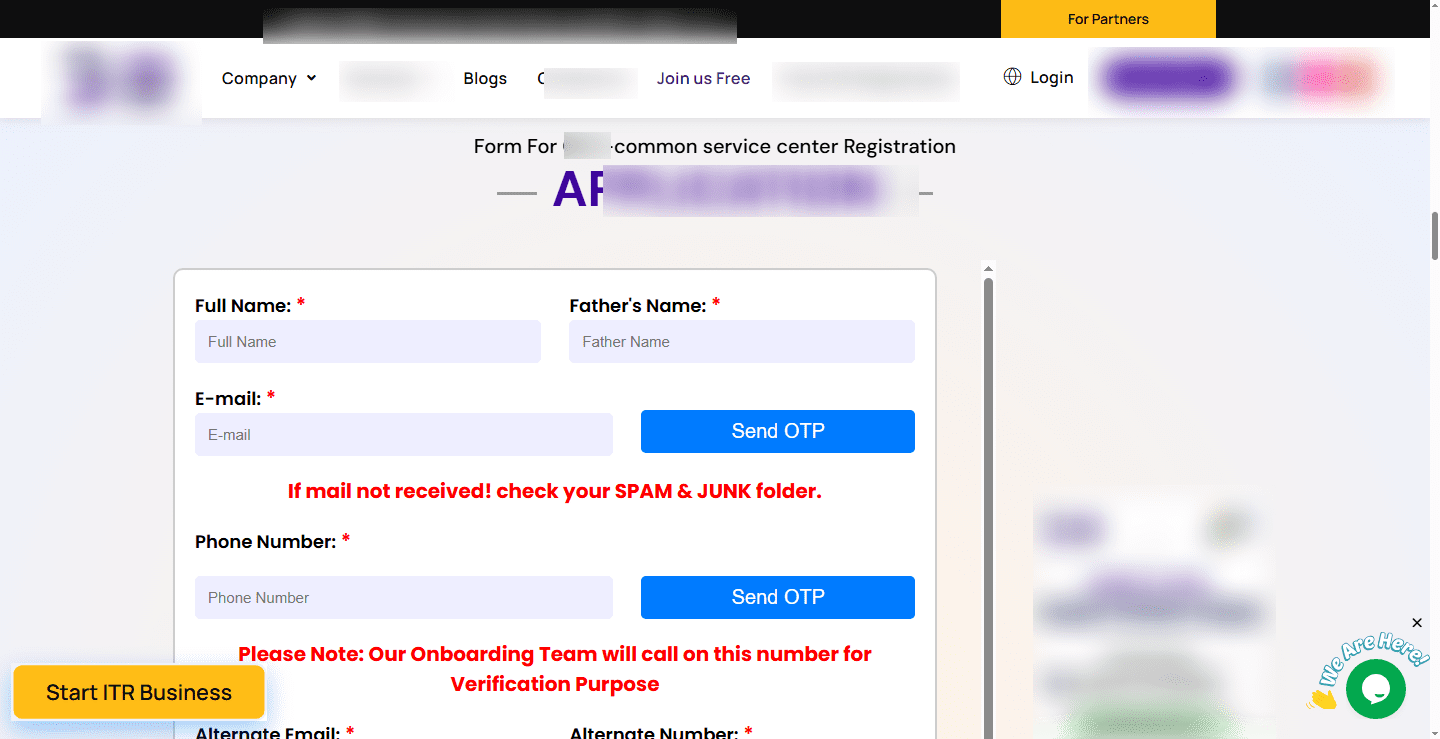
Root Cause Internal iframe navigation was not being captured by the existing parent-page tracking configuration.
FORM STRUCTURE Source Evidence
Screenshot showing the website and embedded iframe lead form
Visualizing the tracking bottleneck caused by iframe-based form submissions.
02 PHASE 02

Custom Event Trigger

We deployed a custom HTML listener capable of monitoring the relevant same-origin iframe activity and detecting the thank-you state dynamically.

Once detected, the listener pushed a clean custom event into the GTM Data Layer, making it available for conversion measurement.
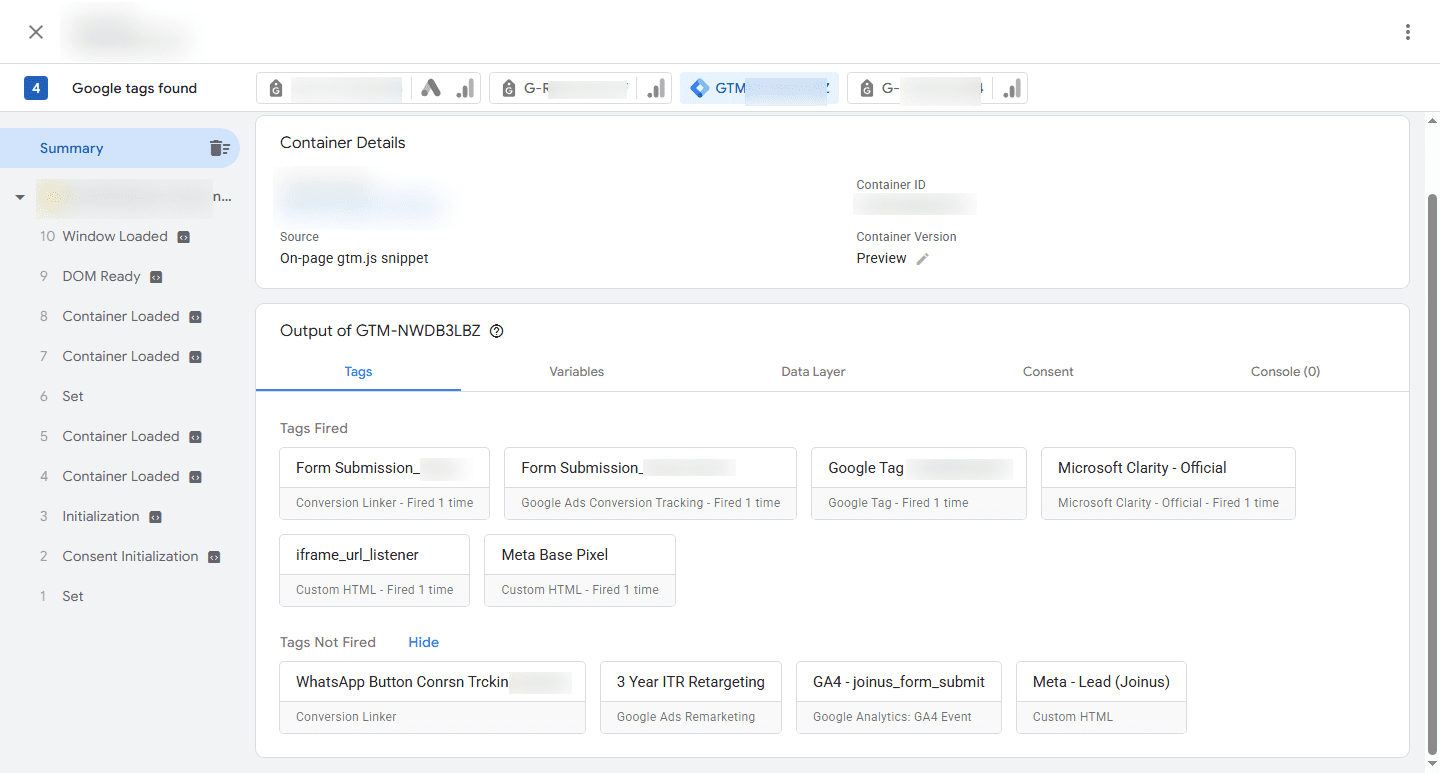
Technical Solution Detect the iframe's thank-you state and trigger a custom dataLayer event without waiting for the main page URL to change.
GOOGLE TAG MANAGER Event Verification
Google Tag Manager preview showing the custom iframe tracking event
GTM preview confirming successful iframe event detection.

How the Custom Tracking Bridge Works

Iframe Form Successful submission
Custom Listener Detects thank-you state
GTM Data Layer Custom event pushed
GA4 & Meta Measurement tags triggered

Data Layer Push

The detected submission event was pushed into the Data Layer to activate the configured GTM custom event triggers.

Platform Sync

The custom conversion event was mapped to Meta Pixel and GA4 for cross-platform conversion reporting and campaign optimization.

The Outcome

From Blind Spend to Data Clarity

The implementation transformed the client's marketing measurement setup from missing conversion data into a trackable, optimization-ready system.

Before Implementation

Leads Generated. Conversions Missing.

Ad campaigns were generating leads, but no conversion data was reaching Meta Ads Manager. Optimization algorithms had no reliable learning signal.

✕ Successful iframe submissions were missed
✕ Lead conversion signals unavailable for campaign learning
✕ Limited visibility into lead-generating campaigns
After Implementation

Lead Events Captured. Data Restored.

Real-time Lead events now fire through the configured Meta Pixel and GTM setup, supporting campaign optimization, audience building and conversion reporting.

✓ Successful iframe events detected
✓ Conversion signals available for campaign optimization
✓ Lead-based audience and reporting capabilities enabled
→ Missing Tracking to Measurable Lead Events

Key Implementation Results

Reported Case Study Outcomes
100% Data Accuracy
Verified Meta Lead Pipeline
Enabled Retargeting Signals

The 100% data accuracy figure is retained from the original case study. Its measurement scope and validation method should be documented before publication.

Technical Tracking & Analytics

Ready to Fix Your Tracking?

If your conversions are hidden inside iframes, third-party forms or broken analytics setups, we can assess your tracking stack and design an appropriate measurement solution.

Book a Technical Audit
Implementation Verification

How We Validated the Tracking Fix

A conversion tracking fix is only useful when successful lead submissions can be detected and passed to the measurement platforms. The GTM event evidence from this case study illustrates the custom iframe detection mechanism.

01

Submit the Form

Test a successful submission inside the embedded iframe.

02

Detect the Thank-You State

Confirm that the custom listener responds to the internal iframe state.

03

Inspect the GTM Event

Check that the custom event appears in GTM Preview.

04

Verify Platform Events

Check the corresponding GA4 and Meta Lead signals.

Google Tag Manager Event Evidence Original Case Study
GTM preview screenshot from the iframe conversion tracking case study
Original GTM screenshot supplied in the technical implementation section. It provides case-study evidence of the custom event detection process.
Recommended Validation Checks

What Needs to Be Verified?

These checks help determine whether an iframe submission is measured correctly across the tracking stack.

GTM Preview

Confirm that the expected custom Data Layer event fires after a successful submission.

Meta Events Manager

Confirm that the intended Lead event is received and is not duplicated.

GA4 DebugView

Check that the relevant event is received with the expected parameters.

Duplicate & False Events

Verify that failed or incomplete submissions do not generate Lead events.

How Should Tracking Accuracy Be Measured?

To support a numerical tracking accuracy claim, compare independently confirmed successful form submissions with matching, correctly recorded conversion events.

Matched Successful Conversion Events ÷ Confirmed Successful Form Submissions × 100 = Successful Submission Capture Rate

This calculation is a proposed validation method, not an independently verified numerical result for this case study. Duplicate or false-positive events should also be checked separately.

Key takeaway: Reliable conversion tracking requires more than detecting an iframe thank-you state. The corresponding GTM, GA4 and Meta events should be checked for successful capture, duplicates and false positives before declaring the measurement setup accurate.

Technical Lessons Learned

Key Takeaways & Technical Limitations

This case study demonstrates why conversion tracking can fail when successful form submissions happen inside an iframe. The solution depends on how the iframe is implemented, which events are accessible and how those events are connected to analytics platforms.

URL Changes Are Not Always Required

A successful form submission may happen without navigating the main website. Conversion tracking should be based on a reliable success signal, rather than depending only on parent-page URL changes.

Iframe Origin Determines Tracking Options

Same-origin iframes can permit parent-page scripts to inspect their content, subject to browser and iframe restrictions. Cross-origin iframes generally block direct DOM access.

Data Layer Events Improve Measurement

A well-defined GTM Data Layer event can connect a verified successful submission with analytics and advertising tags without relying on standard pageview triggers.

Event Verification Is Essential

Detecting the thank-you state is only one part of the solution. Successful events should be verified in GTM, GA4 and Meta, with checks for duplicates, false positives and consent.

Same-Origin vs Cross-Origin Iframe Tracking

The approach used in this case study involved a same-domain iframe. Different iframe architectures can require different tracking methods.

THIS CASE STUDY

Same-Origin Iframe

When the iframe and parent document share the same origin, scripts may be able to access the iframe document and observe its thank-you state.

  • ✓ Detect internal navigation when browser access permits
  • ✓ Monitor an accessible success state
  • ✓ Push verified events to the GTM Data Layer
DIFFERENT IMPLEMENTATION

Cross-Origin Iframe

If an iframe is hosted on a different origin, the browser's same-origin policy prevents the parent page from freely reading its internal document.

  • ✓ Use a supported form-provider callback or integration
  • ✓ Use postMessage communication when the iframe can cooperate
  • ✓ Validate message origins and verify successful submission
i

Technical clarification: A shared domain name alone does not guarantee same-origin access. The protocol, hostname and port must match, and additional iframe restrictions may apply. The listener approach described in this case study should not be assumed to work with every third-party embedded form.

The Biggest Lesson from This Case Study

Reliable conversion tracking starts with understanding how a successful lead submission actually occurs. In this implementation, detecting the internal iframe thank-you state and passing a custom event into GTM restored a measurable conversion signal without changing the main website URL.

The iframe architecture and custom listener described above are specific to this case study. Alternative forms, domains, browser restrictions and consent configurations may require a different implementation.