What is Digital Marketing?
What is Digital Marketing? Meaning, Types, Examples & How It Works
What is Digital Marketing?
Have you ever searched for something on Google, scrolled through Instagram, or watched a video on YouTube? If so, you have experienced digital marketing. At its core, digital marketing is any marketing effort that uses an electronic device or the internet. Businesses leverage digital channels such as search engines, social media, email, and their websites to connect with current and prospective customers.
This form of marketing is very different from traditional methods. It allows companies to reach a much larger audience and target specific customers who are likely to be interested in their products or services. It is not just about selling; it’s about building relationships, providing value, and creating a brand presence where people spend a lot of their time: online. Think of it as a conversation between a company and its customers, happening on various digital platforms.
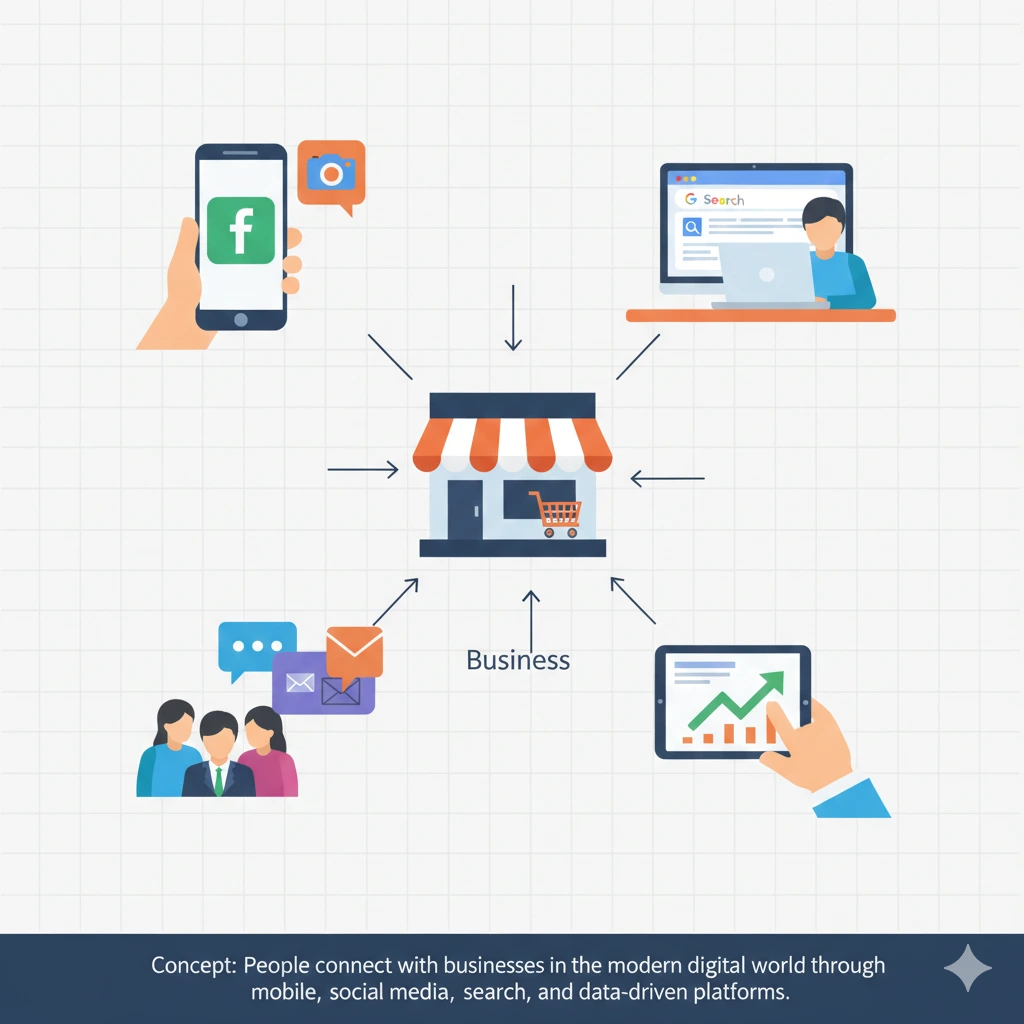
Table of Contents
Digital Marketing Meaning in Simple Words
Let’s break down the digital marketing meaning even further. Imagine you have a stall selling the best lemonade in town. In the old days, you might shout to people walking by or put up a poster. That’s traditional marketing.
Now, imagine you create a fun video of you making the lemonade and share it online. People see it, “like” it, and share it with their friends. You also list your lemonade stall on Google Maps, so when someone nearby searches for “lemonade near me,” your stall pops up. You might even send an email to your loyal customers with a special discount. All these online activities are digital marketing in simple words. It’s using digital tools like phones, laptops, and the internet to tell people about your awesome lemonade and convince them to come and buy it. It’s also known as online marketing or internet marketing.
Why Digital Marketing is Important Today
In today’s world, digital marketing is no longer optional; it’s essential for any business that wants to succeed. People’s habits have changed. Instead of looking in a phone book, they ‘Google’ it. Instead of reading a newspaper, they scroll through social media feeds. Businesses need to be where their customers are, and their customers are online.
One of the biggest advantages is its reach. A small local shop can reach customers across the country, or even the world, through a well-crafted digital strategy. It also levels the playing field. Small businesses can compete with large corporations on a much more equal footing than they could with expensive TV or print ads.
Furthermore, digital marketing is incredibly measurable. You can track almost every aspect of your campaign in real time. You know how many people saw your ad, how many clicked on it, and how many made a purchase. This data allows you to understand what is working and what is not, so you can adjust your strategy for better results. This makes it much more cost-effective than traditional marketing, where it’s often difficult to measure the return on your investment.
Types of Digital Marketing
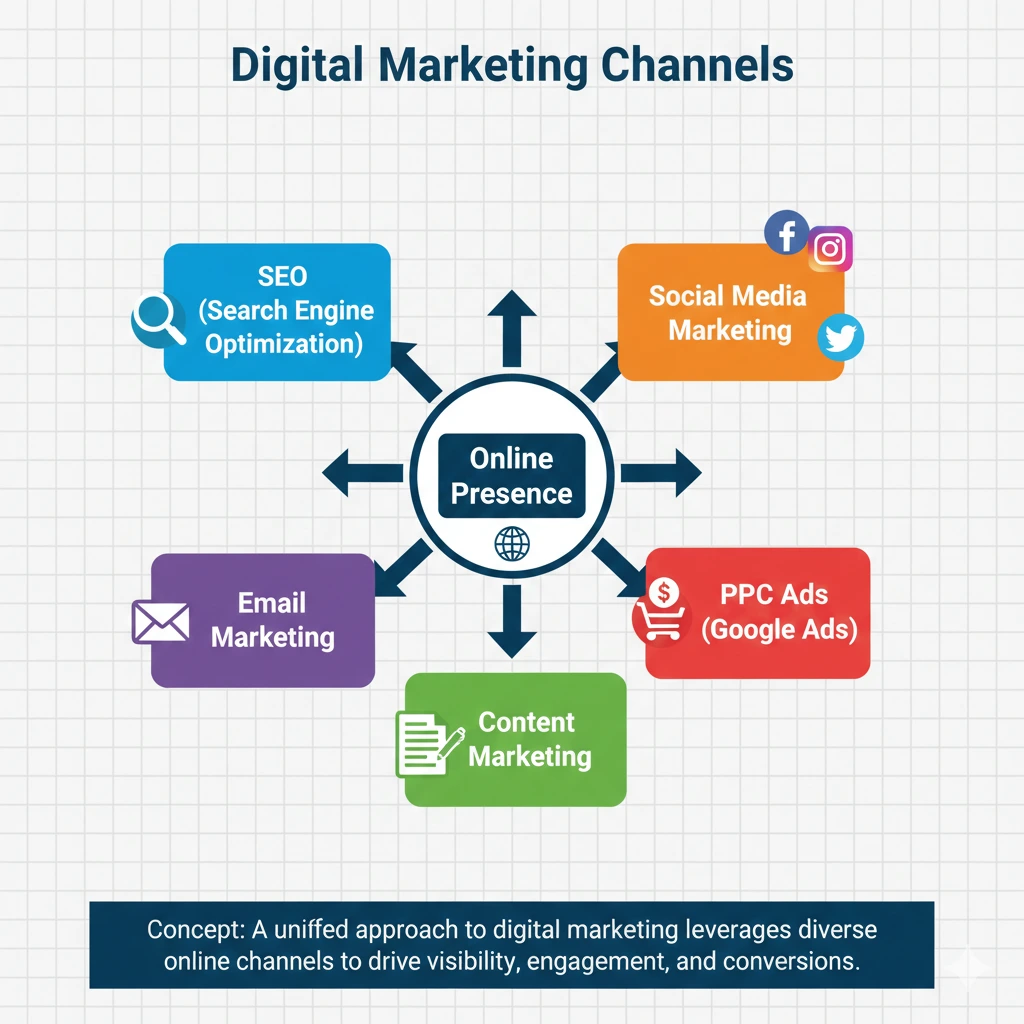
Digital marketing is a broad field with many specialisations. Think of it as a toolbox, with each tool serving a different purpose. A good strategy often uses a combination of these types to achieve its goals. Understanding the main types of digital marketing is the first step for anyone interested in this area.
Search Engine Optimisation (SEO)
Search Engine Optimisation, or SEO, is the process of making your website more attractive to search engines like Google. The goal is to rank higher in search results for keywords and phrases related to your business. When someone searches for “best running shoes,” you want your shoe website to appear on the first page. Why? Because most people never click past the first page of results.
SEO involves several techniques. On Page SEO focuses on optimising elements on your website, such as using relevant keywords in your content, having clear titles and descriptions, and ensuring your site loads quickly. There are also off-page factors, like getting other reputable websites to link to yours, which tells Google your site is trustworthy. More recently, AI SEO has emerged, using artificial intelligence to analyse data and automate optimisation tasks for even better results. Good SEO brings in “organic” traffic—visitors who find you naturally, without you paying for an ad.
Social Media Marketing (SMM)
Social Media Marketing involves using platforms like Facebook, Instagram, Twitter, LinkedIn, and TikTok to promote a product or service. But it’s about more than just posting ads. It’s about engaging with your audience, building a community, and creating a brand personality.
Each platform has its own strengths. Instagram is highly visual, perfect for brands in fashion, food, or travel. LinkedIn is a professional network, ideal for B2B (business-to-business) companies. Facebook has a massive, diverse user base, making it versatile for many types of businesses. A successful social media strategy involves creating content that your audience finds interesting and shareable, running targeted ad campaigns, and responding to comments and messages to build relationships.
Pay-Per-Click (PPC) Advertising
Pay-Per-Click, or PPC, is a model of internet marketing where advertisers pay a fee each time one of their ads is clicked. The most common type of PPC is search engine advertising. You have likely seen these ads at the very top of Google’s search results, marked with the word “Ad.”
With PPC, you bid on keywords you want your ad to show up for. For example, a plumber might bid on the keyword “emergency plumber.” When someone searches for that term, the plumber’s ad might appear. The beauty of PPC is its speed and control. You can get your ad in front of potential customers almost instantly and set a precise budget. Platforms like Google Ads provide detailed analytics, allowing you to refine your campaigns for maximum effectiveness.
Email Marketing
Email marketing is one of the oldest but still one of the most effective forms of digital marketing. It involves sending commercial messages, typically to a group of people, using email. It’s a powerful way to nurture leads and build customer loyalty.
Think about the emails you receive from your favourite brands—they might announce new products, offer special discounts, or share helpful content. This isn’t spam. It’s permission-based marketing, meaning people have subscribed to receive these emails. Effective email marketing is about sending the right message to the right person at the right time. You can segment your email list to send personalised offers, making the communication much more relevant and increasing the chances of a conversion.
Content Marketing
Content marketing is a strategic approach focused on creating and distributing valuable, relevant, and consistent content to attract and retain a clearly defined audience. The ultimate goal is to drive profitable customer action. Instead of pitching your products or services, you are providing truly useful content to your prospects and customers to help them solve their problems.
Content can take many forms: blog posts, videos, podcasts, infographics, ebooks, and webinars. For example, a company that sells gardening tools might create blog posts on “How to grow tomatoes in a small garden” or a video on “The best tools for weeding.” By providing this value for free, the company builds trust and establishes itself as an expert. When the time comes for the customer to buy gardening tools, that company will be the first one they think of.
Affiliate Marketing
Affiliate marketing is a performance-based type of marketing where a business rewards one or more affiliates for each visitor or customer brought by the affiliate’s own marketing efforts. In simpler terms, you pay other people (affiliates) to promote your product.
An affiliate is often a blogger, influencer, or website owner who promotes your product to their audience. They are given a unique link, and every time someone clicks that link and makes a purchase, the affiliate earns a commission. It’s a win-win situation. The business gets more sales without upfront advertising costs, and the affiliate earns money for promoting a product they believe in. Amazon’s Associates program is a massive example of affiliate marketing in action.
How Digital Marketing Works Step by Step
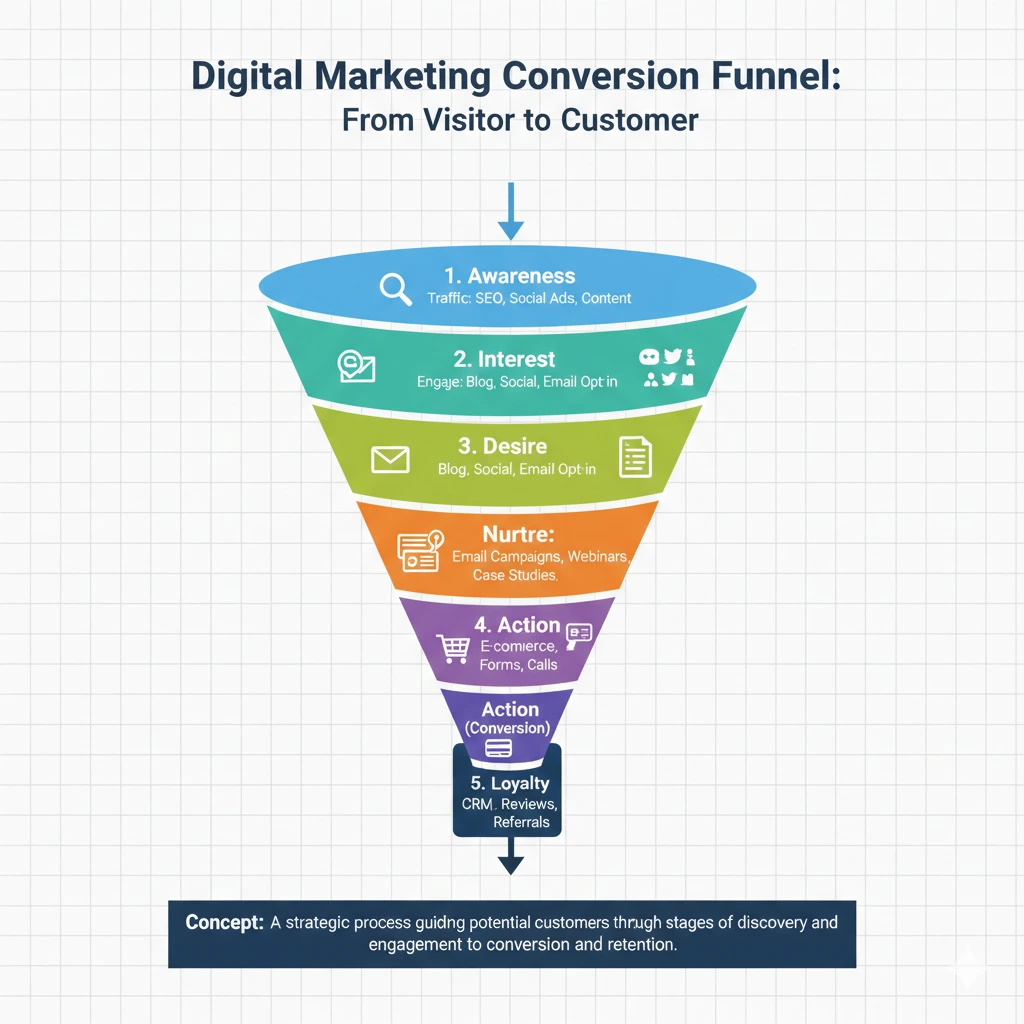
Understanding how digital marketing works can seem complex, but it can be broken down into a logical process. The goal is to guide a person from being a complete stranger to becoming a loyal customer.
- Awareness: The first step is to make people aware that your brand exists. This is done through channels like SEO, social media marketing, and content marketing. You create a blog post, a video, or a social media update that gets in front of your target audience. They may not be ready to buy, but they now know who you are.
- Interest & Consideration: Once someone is aware of your brand, the next step is to capture their interest. This is where you provide value. They might read more of your blog posts, download a free guide, or follow you on social media. You use email marketing to send them helpful tips or case studies. You are not pushing a sale; you are building a relationship and demonstrating your expertise.
- Conversion: This is the step where the potential customer takes a desired action. This “conversion” doesn’t always have to be a purchase. It could be signing up for a webinar, requesting a quote, or filling out a contact form. This is often driven by strong calls-to-action (CTAs) in your content, targeted PPC ads, or special email offers.
- Loyalty & Advocacy: The journey doesn’t end with a sale. The final step is to turn that one-time customer into a loyal fan and advocate for your brand. This is achieved through excellent customer service, ongoing communication via email, and loyalty programmes. A happy customer is likely to buy again and, more importantly, recommend your brand to others, which starts the cycle all over again with new people.
Digital Marketing Examples in Real Life
To truly grasp the concept, let’s look at some digital marketing examples you have probably encountered.
- Spotify’s “Wrapped” Campaign: Every year, Spotify creates a personalized “Wrapped” summary for each user, showing their most-played songs, artists, and genres. Users eagerly share these summaries on social media, creating a massive amount of free advertising and buzz for Spotify. This is a brilliant mix of data personalization, content marketing, and social media marketing.
- Domino’s Pizza Tracker: When you order a pizza from Domino’s online, you can track its progress in real-time, from preparation to delivery. This simple digital feature enhances the customer experience, reduces anxiety (“where is my pizza?”), and keeps the customer engaged with the brand. It is a fantastic example of using digital tools to improve service.
- Nike’s Social Media Presence: Nike uses platforms like Instagram and YouTube not just to sell shoes, but to tell inspiring stories. They feature athletes from all walks of life, create motivational content, and engage in social conversations. This content marketing strategy builds an incredibly strong brand identity that goes far beyond just the products they sell.
- HubSpot’s Blog: HubSpot, a company that sells marketing software, has one of the most comprehensive marketing and sales blogs on the internet. They provide an enormous amount of free, high-quality information. By doing this, they attract millions of visitors every month through SEO. Many of these visitors eventually become customers because HubSpot has already proven its expertise and built trust.
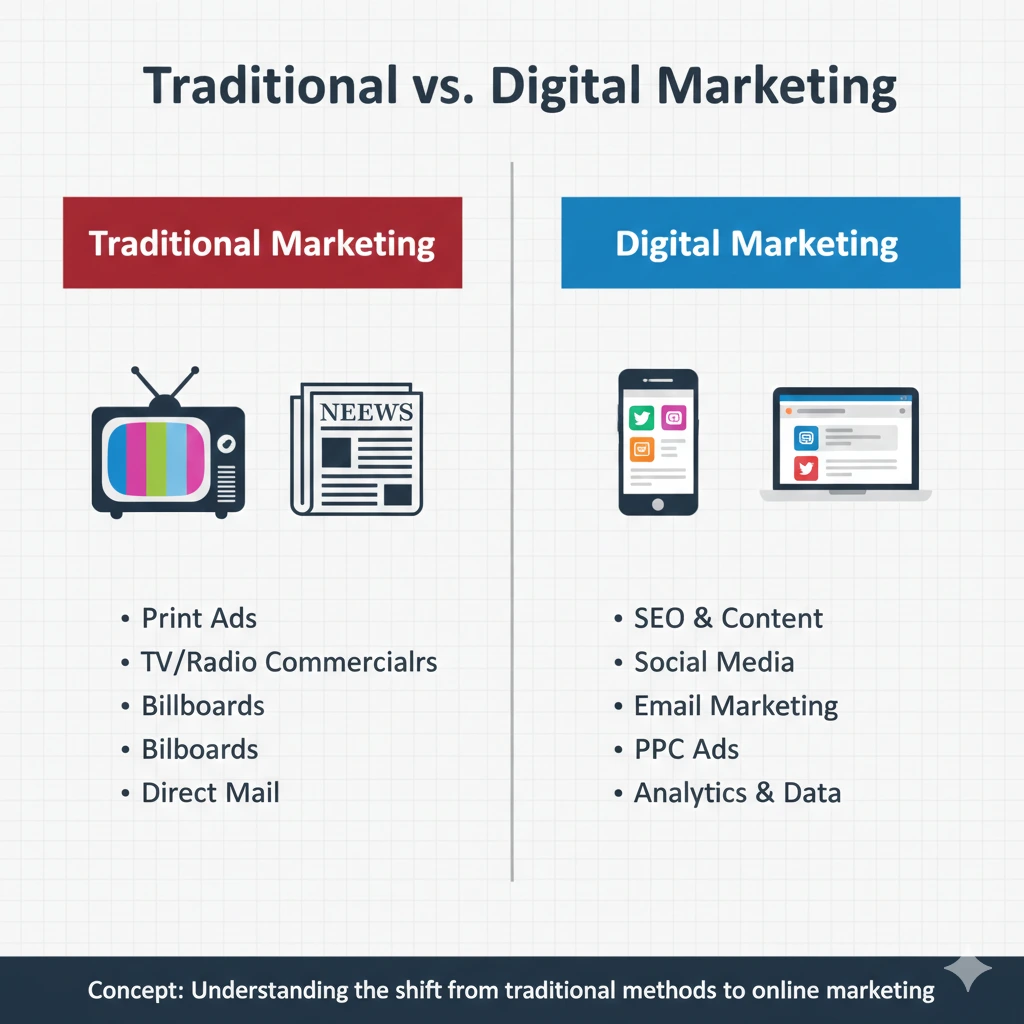
Traditional Marketing vs Digital Marketing
The debate between traditional and digital marketing is a common one. While both aim to attract customers, their methods, costs, and results are vastly different.
Traditional Marketing refers to the “old school” methods that were used before the internet became widespread. This includes:
- Print (Newspaper and magazine ads)
- Broadcast (TV and radio commercials)
- Direct Mail (Postcards, brochures)
- Outdoor (Billboards, flyers)
Digital Marketing, as we’ve discussed, uses online channels.
Here is a comparison:
- Reach: Traditional marketing is often limited by geography (e.g., a local newspaper). Digital marketing has a global reach.
- Targeting: Traditional marketing targets a broad audience. A TV ad is shown to everyone watching, regardless of their interest. Digital marketing allows for hyper-targeting based on demographics, interests, and online behavior.
- Cost: Traditional marketing can be very expensive. A 30-second TV ad can cost thousands of pounds. Many digital marketing methods, like SEO and content marketing, can be started with a much smaller budget.
- Measurement: This is a key difference. It is very difficult to know how many people saw your billboard and then visited your shop. With digital marketing, you can track almost everything. You know your ROI (Return on Investment) precisely.
- Interaction: Traditional marketing is a one-way street. You push a message out. Digital marketing is a two-way conversation. Customers can comment, share, and interact with your brand directly.
While digital marketing has many advantages, traditional marketing is not dead. A well-rounded strategy can sometimes involve both, depending on the business and its audience.
Is Digital Marketing Easy for Beginners?
The question “is digital marketing easy?” is common. The answer is both yes and no.
The “yes” part is that the barrier to entry is low. Anyone with a computer and an internet connection can start learning and even practising. You can create a social media page for a hobby, start a blog, or even run a small PPC campaign with just a few pounds. There is a vast amount of free information available online for Digital Marketing for Beginners, including blogs, YouTube videos, and free courses.
The “no” part is that becoming a true expert takes time, effort, and continuous learning. The digital landscape changes constantly. Google updates its algorithm, new social media platforms emerge, and new technologies like AI change the game. What worked last year might not work today. To be successful, you need to be curious, adaptable, and willing to analyse data to make decisions. It’s not just about being creative; it’s also about being analytical.
How to Start Learning Digital Marketing
If you’re excited about the possibilities and want to start your journey, here is a practical path:
- Master the Fundamentals: Don’t try to learn everything at once. Start by understanding the core concepts outlined in this article: SEO, SMM, PPC, Content, and Email. There are many free resources, like the Google Digital Garage, HubSpot Academy, and Moz’s Beginner’s Guide to SEO.
- Pick a Specialisation: Once you have a basic understanding, choose one area that interests you the most. Are you creative and love writing? Focus on content marketing. Are you analytical and love data? Dive deep into PPC or SEO. Becoming an expert in one area is more valuable than being average in all of them.
- Practise, Practise, Practise: Theory is not enough. The best way to learn is by doing.
- Start a personal project: Create a blog about a passion of yours and try to grow its traffic using SEO.
- Manage social media for a local club or charity: Offer your services for free to gain real-world experience.
- Get certified: Certifications from Google (e.g., Google Ads Certification) or HubSpot can add credibility to your profile.
- Stay Updated: Follow industry blogs (like Search Engine Journal, Content Marketing Institute), listen to marketing podcasts, and connect with other marketers on LinkedIn. The learning never stops.
Career Scope in Digital Marketing
The career scope in digital marketing is immense and growing rapidly. As more businesses move their operations online, the demand for skilled digital marketers is soaring. This is not a trend; it’s a fundamental shift in how business is done.
There are many roles available, catering to different skills and interests:
- SEO Specialist: An analytical role focused on improving a website’s ranking in search engines.
- Social Media Manager: A creative and strategic role focused on managing a brand’s presence on social media.
- Content Strategist: A role that involves planning, creating, and managing content to achieve business goals.
- PPC Manager: An data-driven role focused on managing paid advertising campaigns.
- Email Marketing Specialist: A role focused on creating and optimising email campaigns to nurture and convert leads.
- Digital Marketing Manager: A leadership role that oversees the entire digital marketing strategy and team.
Salaries are competitive, and there are excellent opportunities for career progression. Furthermore, digital marketing offers great flexibility, with many remote work and freelance opportunities available. It’s a dynamic, challenging, and rewarding field for those willing to learn and adapt.

FAQ
The main goal is to connect with a target audience online to build brand awareness, generate leads, and ultimately drive sales or other desired actions. It's about being in the right place at the right time with the right message.
Yes, you can. Many powerful digital marketing strategies cost time, not money. Creating valuable content for your blog (content marketing), optimising your website for search engines (SEO), and building a community on social media can all be done without a significant financial investment.
It depends on the channel. With PPC advertising, you can see results almost instantly. With SEO and content marketing, it's a long-term strategy. It can take several months (3-6 months or more) to see significant results, but the benefits are often more sustainable.
Not necessarily. While some areas like technical SEO require a bit more technical knowledge, many aspects of digital marketing, like social media and content writing, are more about creativity, communication, and strategy. A willingness to learn is more important than a technical background.
The terms online marketing, internet marketing, and digital marketing are often used interchangeably. Digital marketing is the broadest term, encompassing all marketing that uses electronic devices (including offline digital media like electronic billboards). Online marketing specifically refers to marketing that is done over the internet. In practical terms, most people use them to mean the same thing.