Types of Digital Marketing
Types of Digital Marketing – Complete Beginner Guide
Imagine trying to shout across a crowded room to tell a friend about a great new pizza place. That is what traditional marketing feels like sometimes. Now, imagine sending that friend a direct text message with a photo of the pizza and a discount code. That is the power of digital marketing.
If you are a student, a job seeker, or a small business owner, the world of online promotion might seem overwhelming. You hear terms like SEO, PPC, and content marketing thrown around, and it can feel like a foreign language. But here is the good news: it is not nearly as complicated as it sounds.
This guide will break down the different types of digital marketing into simple, bite-sized pieces. By the end, you won’t just know the definitions; you will understand how they fit together to help businesses grow.
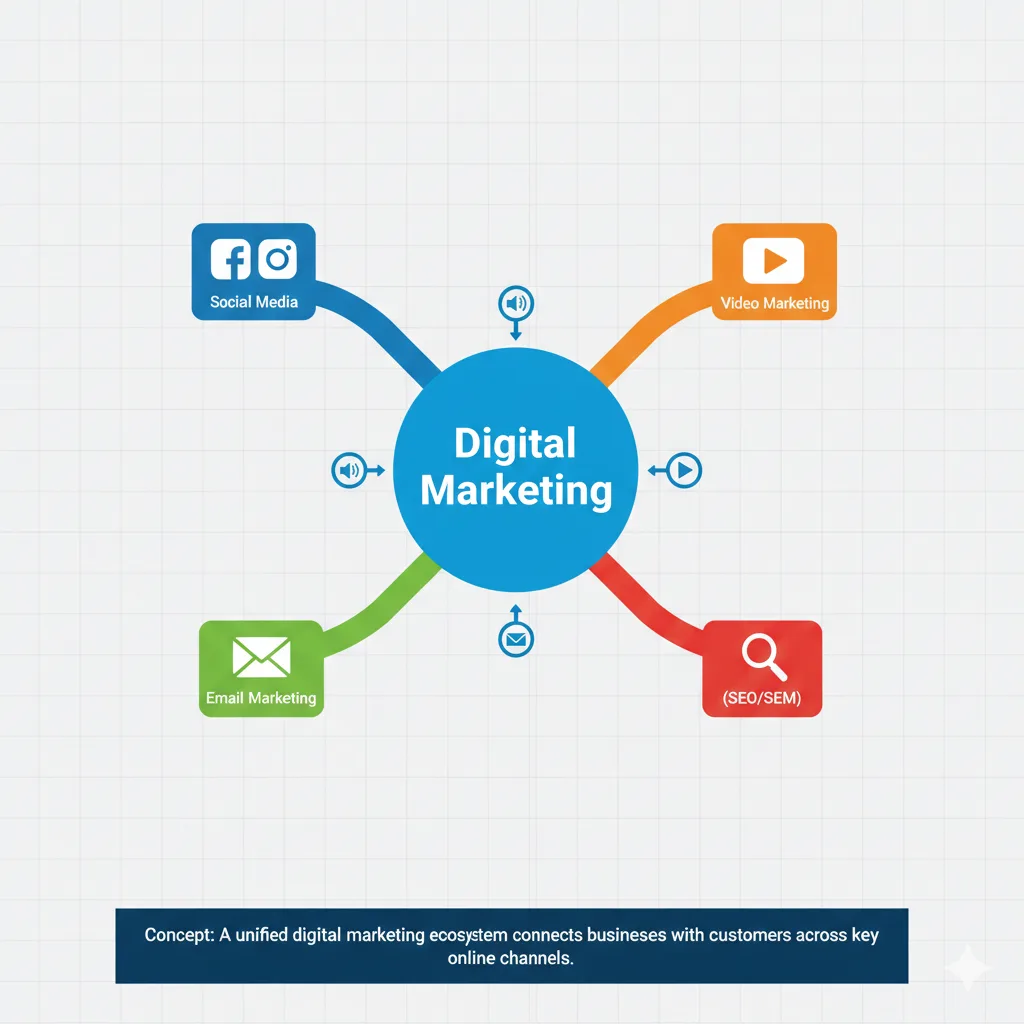
Table of Contents
What are Digital Marketing Channels?
Before we dive into the specific types, let’s clarify what we mean by “channels”. In the physical world, a channel might be a billboard, a TV station, or a newspaper. In the digital world, a channel is simply the platform or method you use to reach your audience online.
Think of digital marketing channels as different roads leading to the same destination: your business. Some roads are fast but expensive (like paid ads). Others are slower but free (like writing blogs). To succeed in digital marketing for beginners, you need to choose the right roads for your journey.
These channels are the tools in your toolbox. You wouldn’t use a hammer to tighten a screw, right? Similarly, you wouldn’t use every single digital channel for every single business goal. Understanding what each tool does is the first step to success.
Why There Are Different Types of Digital Marketing
You might wonder, “Why can’t I just post on Facebook and call it a day?”
The reason there are so many online marketing types is that people behave differently depending on where they are online.
- Intent matters: When someone searches on Google for “emergency plumber”, they have a very different intent than someone scrolling through TikTok for entertainment.
- Audience location: Teenagers hang out on different platforms than corporate CEOs.
- Format variety: Some messages work better as videos; others work better as detailed articles.
Successful internet marketing isn’t about doing everything. It is about meeting your potential customers exactly where they are, with the right message, at the right time
Major Types of Digital Marketing
Let’s explore the ten most critical categories you need to know. We will look at how they work, real-world examples, and who should use them.
1. Search Engine Optimization (SEO)
What it is:
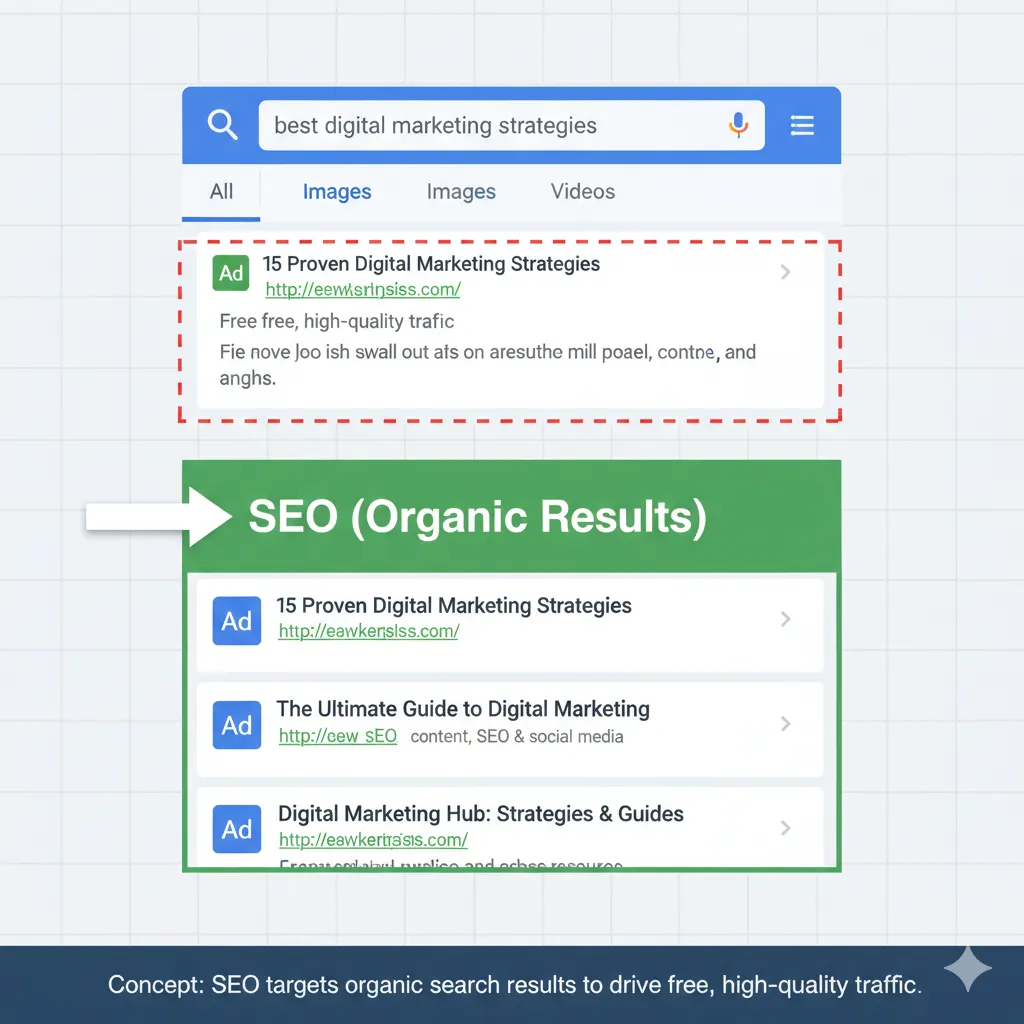
SEO stands for Search Engine Optimization. It is the art and science of getting your website to show up at the top of search results (like Google or Bing) without paying for ads. When people search for something relevant to your business, you want to be the first answer they see.
How it works:
Search engines use “crawlers” to scan the internet and build an index of websites. When you search, the engine checks its index to find the most relevant and high-quality results. SEO involves optimizing your site so these crawlers understand it and trust it.
There are three main pillars:
- On Page SEO: Working on the content users see, like using the right keywords and writing helpful articles.
- Technical SEO: Working on the backend, ensuring the site loads fast and is mobile-friendly.
- Off Page SEO: Building authority, usually by getting other reputable sites to link back to yours.
This often starts with keyword research to find out what words people are actually typing into Google. Recently, AI SEO has also become popular, using artificial intelligence to analyze data and optimize content faster.
Example:
A local bakery creates a blog post titled “How to Make the Perfect Sourdough Starter”. When home bakers search for this phrase on Google, the bakery’s website appears first. The user clicks, learns the recipe, and sees that the bakery also sells high-quality flour, which they then buy.
Who should use it:
Almost everyone. SEO is crucial for long-term growth. It is especially vital for businesses that rely on people searching for solutions, like service providers, ecommerce stores, and bloggers.
2. Content Marketing
What it is:
Content marketing is a strategy where you create valuable, relevant content to attract an audience. Instead of pitching your products directly, you provide help, entertainment, or education. The goal is to build trust so that when the customer is ready to buy, they choose you.
How it works:
You create content—blogs, videos, ebooks, or podcasts—that answers your audience’s questions. You distribute this content through other channels like social media or email. It is a long-term strategy that focuses on relationship building rather than hard selling.
Example:
A company that sells hiking boots starts a blog called “The Trail Guide”. They write articles about “The Best Hikes in the UK” and “How to Pack for a Camping Trip”. They aren’t just saying “buy our boots”. They are helping hikers. Eventually, readers trust the brand and buy boots from them because they view the company as experts.
Who should use it:
Any business that has a story to tell or expertise to share. It is particularly powerful for B2B (business-to-business) companies and brands selling expensive products where customers need to do a lot of research before buying.
3. Social Media Marketing
What it is:
This involves using social media platforms like Facebook, Instagram, LinkedIn, TikTok, and X (formerly Twitter) to promote your brand. It is one of the most visible digital marketing examples because almost everyone uses social media daily.
How it works:
It works in two ways: organic and paid.
- Organic: You post photos, videos, and stories for free to engage with your followers. You reply to comments and build a community.
- Paid: You pay the platform to show your posts to specific groups of people (e.g., “show this ad to women aged 25-34 living in London who like yoga”).
Example:
A skincare brand launches a new moisturiser. They post a tutorial reel on Instagram showing how to apply it. They also encourage customers to post their own photos using a specific hashtag. This creates buzz and social proof.
Who should use it:
B2C (business-to-consumer) brands usually thrive on visual platforms like Instagram and TikTok. B2B companies often find more success on LinkedIn.

4. Email Marketing
What it is:
Email marketing is the process of sending commercial messages to a group of people via email. It is one of the oldest online marketing types, but it remains one of the most effective because you own the list of contacts—you aren’t relying on a social media algorithm.
How it works:
First, you need to get people to give you their email address (often by offering a discount or a free guide). Once they subscribe, you send them different types of emails:
- Newsletters: Regular updates to keep them engaged.
- Promotional emails: Sales, offers, and new product launches.
- Welcome series: Automated emails sent to new subscribers to introduce your brand.
Example:
You visit an online clothing store and see a popup: “Get 10% off your first order when you sign up.” You enter your email. A few minutes later, you receive a code. A week later, you get an email showing you new arrivals that match the style of the item you looked at.
Who should use it:
Ecommerce stores, service businesses, and content creators. If you want to turn one-time visitors into repeat customers, email is essential.
5. Pay Per Click (PPC / Google Ads)
What it is:
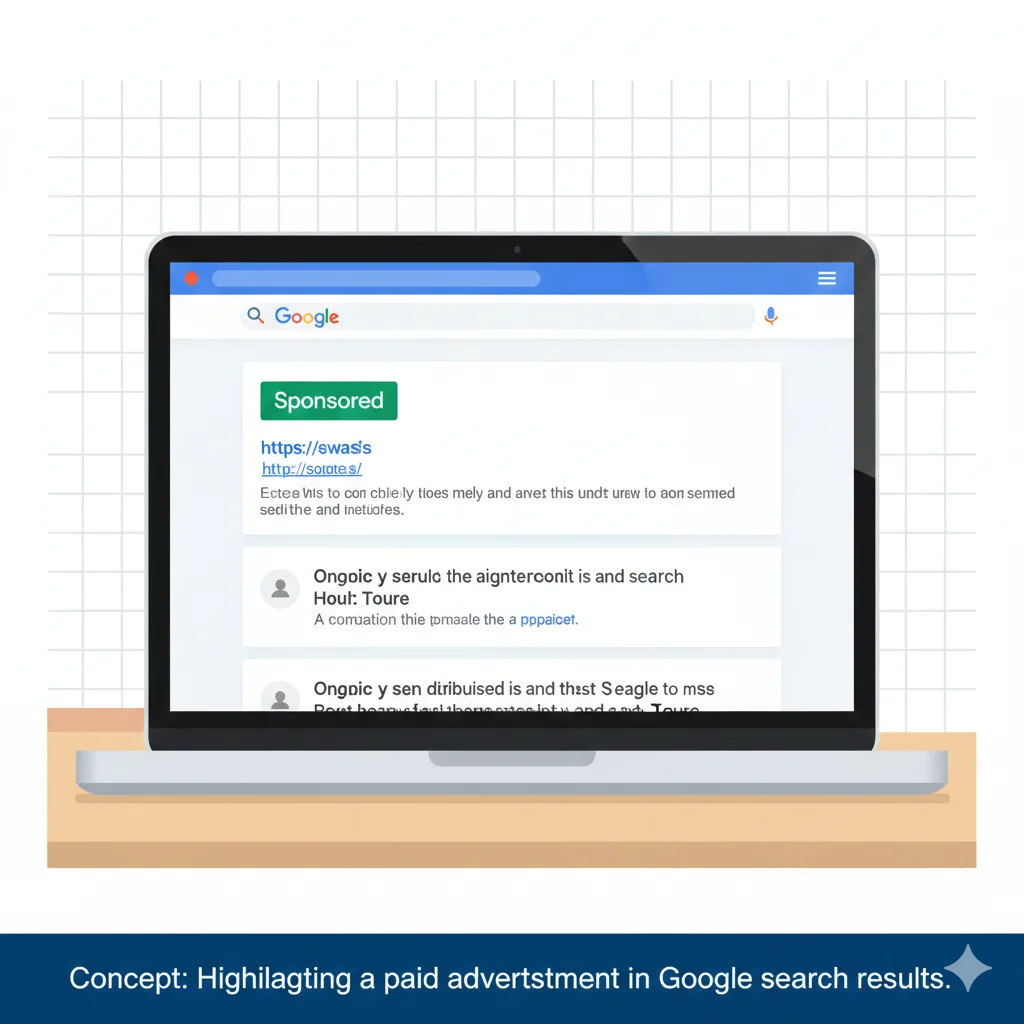
PPC stands for Pay-Per-Click. It is a model of advertising where you pay a fee each time one of your ads is clicked. It is essentially buying visits to your site rather than “earning” them organically through SEO. The most common platform for this is Google Ads.
How it works:
You bid on keywords relevant to your business. For example, a plumber might bid on “emergency plumber near me”. When someone searches for that, your ad appears at the very top of the results page (above the SEO results). If the user clicks your ad, you pay the bid amount. If they see it but don’t click, you pay nothing.
Example:
A new shoe company wants immediate traffic. They set up a Google Ads campaign for “running shoes for flat feet”. Within hours, their website starts getting visitors. Although they pay for each click, if the profit from selling a pair of shoes is higher than the cost of the click, the campaign is profitable.
Who should use it:
Businesses that need immediate results, seasonal businesses (like selling Christmas trees), or brands launching a new product that no one knows about yet.
6. Affiliate Marketing
What it is:
Affiliate marketing is a performance-based arrangement. You (the merchant) pay a commission to an external website or individual (the affiliate) for traffic or sales generated from their referrals.
How it works:
An affiliate promotes your product using a unique link. When a customer clicks that link and buys something, the tracking software records it, and the affiliate earns a percentage of the sale. It is a win-win: the business gets a sale, and the marketer gets a commission.
Example:
A popular tech YouTuber reviews a new laptop. In the description, they say, “Check the price here” with a link to Amazon. If you click that link and buy the laptop, Amazon pays the YouTuber a small fee. Amazon didn’t have to advertise to you directly; the YouTuber did the work for them.
Who should use it:
Product-based businesses wanting to expand their reach without paying for ads upfront. It is also a popular way for bloggers and influencers to earn money.
7. Influencer Marketing
What it is:
This involves partnering with influencers—people who have a dedicated social following and are viewed as experts in their niche. It is similar to celebrity endorsements but often feels more authentic because influencers usually have a closer connection with their audience.
How it works:
A brand identifies an influencer whose audience matches their target market. They pay the influencer (or provide free products) to create content featuring the brand. This leverages the trust the influencer has already built with their followers.
Example:
A healthy snack company sends a box of protein bars to a fitness influencer on Instagram. The influencer posts a video eating the bar after a workout, saying how good it tastes. Their followers, who trust their fitness advice, decide to try the bars too.
Who should use it:
Lifestyle, fashion, beauty, and food brands. It is very effective for products that look good visually and benefit from a personal recommendation.
8. Mobile Marketing
What it is:
Mobile marketing is a multi-channel digital marketing strategy aimed at reaching a target audience on their smartphones, tablets, and other mobile devices via websites, email, SMS and MMS, social media, and apps.
How it works:
This isn’t just one channel; it is adapting all your marketing to fit a small screen. It also includes specific tactics like:
- SMS Marketing: Sending text messages with offers.
- In-app advertising: Ads that appear inside mobile games or apps.
- Location-based marketing: Sending alerts when a user is physically near your store (using GPS).
Example:
You are walking past a coffee shop and your phone buzzes. It is a notification from the shop’s app: “You’re nearby! Pop in for a half-price latte in the next 30 minutes.”
Who should use it:
Local businesses (restaurants, retail) and companies with their own mobile apps. Since most internet usage is now mobile, every business needs to ensure their website is mobile-friendly.
9. Video Marketing
What it is:
Using video content to promote or market your brand, product, or service. It can be used on YouTube, social media, or your own website.
How it works:
Video is highly engaging. It combines visual and audio elements to tell a story faster than text can. You can create:
- Demo videos: Showing how a product works.
- Brand videos: Sharing your company values.
- Educational videos: How-to guides.
- Live videos: Streaming events or Q&A sessions.
Example:
A software company creates a 2-minute animation explaining how their complex software solves a simple problem. They put this on their homepage. Visitors watch the video instead of reading a long paragraph, understand the product immediately, and sign up for a trial.
Who should use it:
Almost everyone. People love watching videos. It is especially useful for demonstrating products that are hard to explain with just photos.
10. Local Digital Marketing
What it is:
This is a strategy that targets customers within a specific radius of a physical business location. It focuses on converting local traffic into foot traffic.
How it works:
The core of this is your “Google Business Profile” (formerly Google My Business). When you optimise this, you show up in the “Map Pack” (the map that appears at the top of Google results for local searches). It also involves getting local reviews and ensuring your name, address, and phone number are consistent across the web.
Example:
A user searches for “hairdresser near me”. Google sees their location and shows three local salons on a map. The salon with the most 5-star reviews and nice photos gets the call.
Who should use it:
Brick-and-mortar businesses like plumbers, dentists, restaurants, shops, and law firms. If you need customers to physically visit you or you visit them, this is non-negotiable.
Which Type of Digital Marketing is Best for Beginners?
With so many types of digital marketing, you might feel paralysed. Which one should you start with?
The truth is, there is no single “best” type. However, for most beginners and small businesses, a combination of Content Marketing and SEO is the safest starting point.
Why? Because they are free (aside from your time) and they build a long-term asset. When you write a great blog post, it can bring you traffic for years.
If you have a budget and need sales today, PPC (Google Ads) or Social Media Ads might be better. But be careful—once you stop paying, the traffic stops immediately.
For students looking for a career, Social Media Marketing is often an accessible entry point because you likely already use the platforms. However, learning SEO or Data Analytics often leads to higher-paying roles because they are more technical.
How Businesses Use Multiple Digital Marketing Types Together
Successful businesses rarely use just one channel. They use an integrated approach. Let’s look at how these channels work together in a hypothetical campaign for a new fitness app.
- Awareness: The company uses Influencer Marketing to get fitness trainers to talk about the app. They also run Social Media Ads showing people working out.
- Consideration: People see the ads and search for the app on Google. Thanks to SEO, they find a blog post on the app’s website titled “10 Exercises You Can Do at Home”.
- Conversion: The visitor likes the blog and sees a 50% off offer. They click and download the app.
- Retention: Once they sign up, the company uses Email Marketing to send weekly workout tips and Mobile Marketing (push notifications) to remind them to log their workout.
See how they all link up? The social media grabbed attention, SEO provided information, and email kept the customer engaged.
Real-Life Digital Marketing Examples
Let’s look at two famous brands and the primary channels they use.
- GoPro (User-Generated Content & Social Media)
GoPro doesn’t just tell you their cameras are good; they show you. Their entire strategy is built around Video Marketing and Social Media. They encourage customers to upload their own crazy adventure videos. GoPro then shares the best ones. This is free content for them and proves the quality of the camera. It’s authentic and exciting. - HubSpot (Content Marketing & SEO)
HubSpot sells marketing software. Their strategy is to answer every single question a marketer might have. If you search for “how to write a blog post” or “email subject line examples”, you will likely find a HubSpot article. They give away massive amounts of free value via Content Marketing, which brings millions of people to their site via SEO.
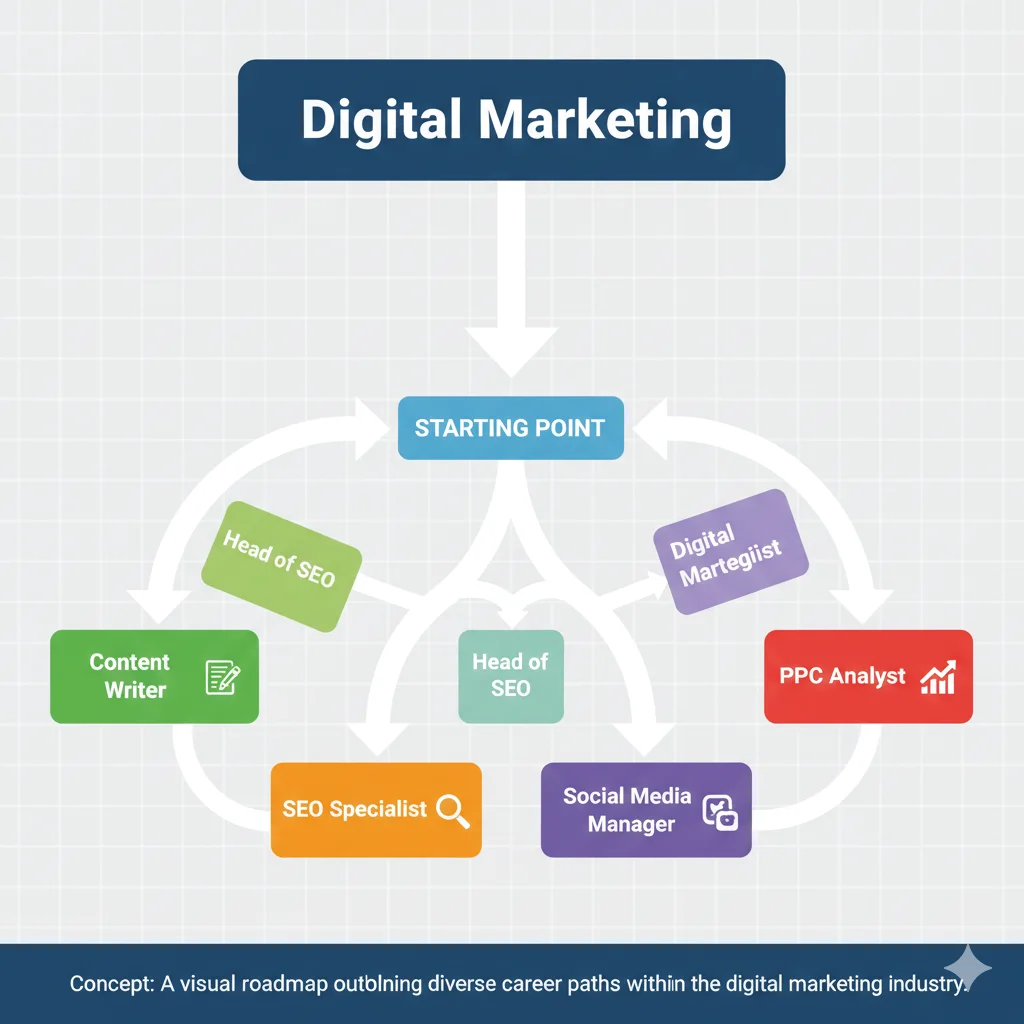
Digital Marketing Career Based on Different Types
The digital marketing industry is booming, and there are jobs for every personality type.
- For the Creative: If you love writing, Content Marketing or Copywriting is for you. If you are visual, look into Social Media Management or Video Production.
- For the Analytical: If you love data, spreadsheets, and patterns, SEO and PPC are perfect. You will spend your days analysing numbers to improve performance.
- For the People Person: If you are great at building relationships, Influencer Marketing or PR (Public Relations) allows you to connect with people all day.
- For the Tech-Savvy: Technical SEO or Marketing Automation (setting up complex email flows) requires a more technical mindset.
You can specialise in one area (becoming a “T-shaped marketer”—deep knowledge in one area, broad knowledge in others) or become a “Generalist” who knows a little bit about everything, which is great for managing teams.
FAQ
No. While a degree helps, this industry values skills and portfolios more. If you can prove you grew a social media account or ranked a website on Google, you can get hired.
Yes. Organic strategies like SEO, social media posting, and content creation cost time but not money. Paid ads (PPC) require a budget.
It depends on the channel. PPC and paid social ads can bring results in 24 hours. SEO and content marketing typically take 6 to 12 months to show significant traction.
Absolutely not. It actually has one of the highest returns on investment (ROI) of any digital channel because it is direct and personal.
Adaptability. The internet changes every day. The best marketers are the ones who never stop learning.