SEO Tools
SEO Tools – Best Free & Paid Tools for Keyword Research, Ranking, Backlinks & Audits
Search Engine Optimization (SEO) is a complex and dynamic discipline. To navigate its challenges and unlock its potential, practitioners rely on a specialized arsenal of software known as SEO tools. These platforms provide the data, insights, and automation necessary to understand search engine algorithms, analyze competitor strategies, and optimize websites for higher rankings. From uncovering valuable keywords to auditing technical performance and tracking progress, these tools are indispensable for anyone serious about digital marketing. This comprehensive guide explores the world of SEO tools, covering everything from fundamental free options to advanced paid suites. We will break down the different types of tools available, review the industry’s leading platforms, and discuss how to choose the right software for your specific needs, whether you are a small business owner or part of a large enterprise.
Table of Contents
What Are SEO Tools?
SEO tools are software applications and platforms designed to help you improve your website’s visibility in search engine results pages (SERPs). Think of them as your digital marketing toolkit, providing the instruments needed to measure, analyze, and enhance your site’s performance. At their core, these tools collect and process vast amounts of data related to search engines and websites, presenting it in an understandable and actionable format. This allows you to make informed decisions about your SEO strategy rather than relying on guesswork. Without them, tasks like identifying what users are searching for or finding websites that link to your competitors would be nearly impossible.
These tools serve a wide range of functions. Some specialize in one particular area, such as finding the right keywords for your content. Others are comprehensive, all-in-one platforms that cover the entire spectrum of SEO activities, from initial site audits to ongoing performance monitoring. For example, a tool might crawl your website just like a search engine bot would, identifying technical issues like broken links or slow page speeds that could harm your rankings. Another might analyze the backlink profiles of top-ranking pages, revealing opportunities for you to earn similar links. They simplify complex processes and provide a clear framework for executing an effective SEO campaign. SEO is a data-driven practice, and these tools are the primary source of that crucial data, transforming abstract concepts into tangible metrics like keyword difficulty, domain authority, and organic traffic trends.
The scope of what constitutes an SEO tool is broad. It ranges from simple, free browser extensions that check on-page elements to sophisticated, enterprise-level software that uses AI to predict traffic potential and automate reporting. A typical workflow might involve using a keyword research tool to discover topics, an on-page SEO tool to optimize the content, a backlink checker to guide outreach efforts, and a rank tracker to monitor the results. These applications are essential for anyone involved in digital marketing, from solo bloggers and small business owners to in-house marketing teams and large digital agencies. They provide the competitive intelligence and technical insights needed to succeed in the ever-evolving landscape of search.
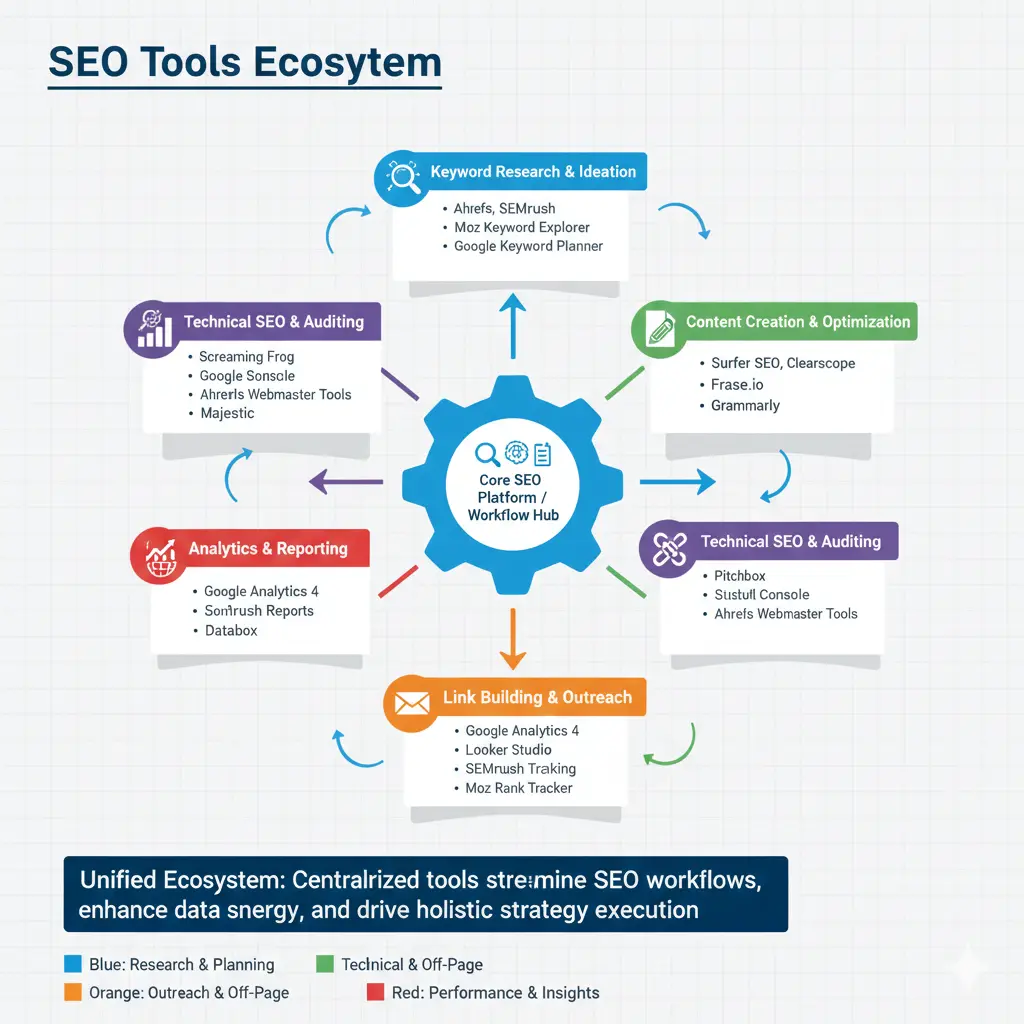
Why SEO Tools Are Required for Google Rankings
Achieving and maintaining high rankings on Google is not a matter of luck; it is a strategic process heavily reliant on data and analysis. SEO tools are essential because they provide the necessary data to understand the competitive landscape and Google’s ranking factors. Search engines use hundreds of signals to determine which pages to show for a given query. Manually assessing all these signals across your website and those of your competitors is an impossible task. SEO tools automate this data collection and analysis, giving you a clear view of where you stand and what you need to do to improve. For example, they can quickly tell you which keywords your competitors are ranking for, how much traffic those keywords drive, and how difficult it would be for you to rank for them.
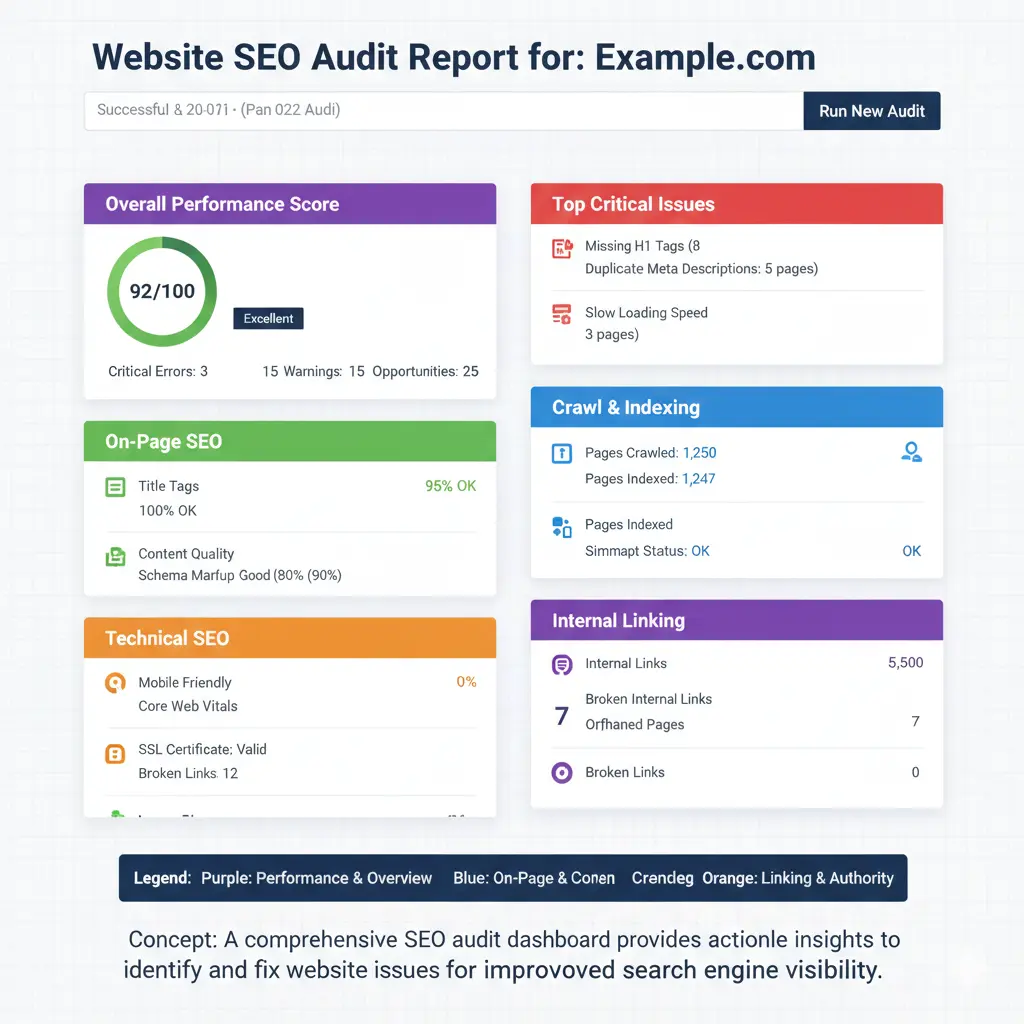
Beyond competitive analysis, SEO tools are crucial for identifying and fixing issues that could be holding your website back. A website may look perfect to a human visitor, but search engine crawlers can encounter technical problems that prevent them from properly indexing your content. Issues like incorrect robots.txt configurations, broken internal links, or slow-loading pages can severely impact your ability to rank. A good website SEO checker will perform a comprehensive audit, flagging these problems so you can address them. This proactive approach to technical health is fundamental to any successful SEO campaign. Without these tools, many critical ranking issues would go unnoticed, leaving you wondering why your content isn’t performing.
Furthermore, SEO tools enable you to measure the impact of your efforts and demonstrate return on investment (ROI). SEO is a long-term strategy, and progress can be gradual. Rank tracking tools, for instance, monitor your website’s position for target keywords over time, providing clear evidence of whether your strategy is working. They can show you how a new piece of content or a successful link-building campaign has improved your visibility. This data is vital for refining your approach and for communicating the value of SEO to stakeholders or clients. By connecting your efforts to tangible outcomes like increased organic traffic and conversions, SEO tools turn your optimization work from a cost center into a proven revenue driver. They bridge the gap between action and result, making them an indispensable part of modern digital marketing.
Types of SEO Tools
The world of SEO tools is vast, with different applications designed to handle specific aspects of the optimization process. Understanding these categories helps you build a comprehensive toolkit that covers all your bases. While many all-in-one platforms offer features across these types, specialized tools often provide deeper insights in their niche.
Keyword Research Tools
Keyword research is the foundation of any SEO strategy. It is the process of finding the words and phrases that people use when searching for information, products, or services related to your business. Keyword research tools are essential for this task. They help you discover new keyword ideas, understand how many people are searching for them (search volume), and gauge how difficult it will be to rank for them (keyword difficulty). For example, a tool like Ahrefs’ Keywords Explorer can take a single “seed” keyword, such as “running shoes,” and generate thousands of related ideas like “best trail running shoes for beginners” or “lightweight running shoes for marathon.” This allows you to target long-tail keywords that often have lower competition and higher conversion intent. These tools also provide crucial metrics that guide your content strategy. Seeing that “how to choose running shoes” has a high search volume and a manageable difficulty score tells you that creating a comprehensive guide on that topic could attract significant organic traffic.
Backlink Checker Tools
Backlinks—links from other websites to yours—are one of the most powerful ranking signals for Google. They act as votes of confidence, indicating that other sites find your content valuable. Backlink checker tools allow you to analyze your own backlink profile and, just as importantly, those of your competitors. Using a tool like Moz Link Explorer or SEMrush’s Backlink Analytics, you can see every website that links to a specific page or domain. This is incredibly useful for several reasons. First, you can audit your own profile to identify and disavow potentially harmful, spammy links. Second, by analyzing your competitors’ backlinks, you can uncover their link-building strategies. For instance, if you see that your top competitor has earned several links from popular running blogs, you know that reaching out to those same blogs could be a fruitful part of your off-page SEO efforts. These tools turn link building from a guessing game into a data-driven process.
Rank Tracking Tools
Once you have created content and built backlinks, you need to know if your efforts are paying off. Rank tracking tools automate the process of checking your website’s position in the search results for your target keywords. Manually checking your rankings is unreliable due to personalized search results and the sheer volume of keywords you might be targeting. A rank tracker, such as AccuRanker or SERPWatcher, will check your rankings daily from a specific location and device type, giving you accurate, objective data. This allows you to monitor your progress over time, spot sudden drops that might indicate a technical issue or penalty, and identify opportunities where a small push could move a page from position 11 to the first page. For example, if you see a page for “best winter running gear” hovering at the top of page two, you might decide to update the content or build a few more links to give it the boost it needs.
Website SEO Checker & Audit Tools
A website SEO checker, also known as a site audit tool, is a diagnostic application that crawls your entire website to identify technical and on-page issues that could be hurting your search performance. These tools simulate how a search engine bot would interact with your site, flagging problems that might not be visible to the human eye. Common issues identified include broken links (404 errors), slow page load speeds, missing title tags or meta descriptions, duplicate content, and improper use of redirect chains. Tools like Screaming Frog SEO Spider or the Site Audit feature within SEMrush provide comprehensive reports that priorities these issues by severity. For instance, an audit might reveal that your most important product pages are loading too slowly, causing users and search bots to abandon them. Fixing this one issue could lead to a significant improvement in both user experience and rankings. These audits form the basis of any solid technical SEO strategy.
Technical SEO Tools
While site audit tools provide a broad overview, specialized technical SEO tools offer deeper insights into specific aspects of a site’s technical health. This category includes tools for analyzing site speed, mobile-friendliness, structured data, and crawlability. Google’s own PageSpeed Insights is a prime example. It analyses a page’s performance on both mobile and desktop devices and provides actionable recommendations for improvement, such as compressing images or leveraging browser caching. Another example is Google’s Rich Results Test, which allows you to check if your structured data (like Schema markup) is implemented correctly so that your pages can qualify for enhanced search features like review snippets or FAQ dropdowns. These tools are indispensable for web developers and SEO professionals who need to fine-tune the backend of a website to ensure it meets Google’s ever-stricter technical standards. They help you solve complex problems that are critical for search engine accessibility and user experience.
On Page SEO Tools
On-page SEO involves optimizing the individual elements of a web page to improve its relevance and authority for target keywords. On-page SEO tools help you perfect this process. They go beyond basic keyword placement and analyze your content in the context of the top-ranking competitors. Tools like SurferSEO or Clearscope analyze the SERPs for your target keyword and provide a detailed brief on what your content needs to include. This might involve recommendations for word count, the inclusion of specific related terms and entities, the number of headings to use, and even the questions to answer within your article. For example, if you are writing about “home coffee brewing,” the tool might suggest you cover topics like “pour-over,” “French press,” and “cold brew,” because these are common themes in the top-ranking articles. This data-driven approach helps you create content that is not just well-written but also comprehensive and perfectly aligned with searcher intent.
SEO Reporting & Monitoring Tools
For agencies and in-house marketers, communicating progress and results is just as important as achieving them. SEO reporting and monitoring tools automate the creation of detailed performance reports for clients or stakeholders. These platforms integrate with other data sources like Google Analytics and Search Console to pull key metrics into customizable dashboards and documents. Tools like Looker Studio (formerly Google Data Studio), AgencyAnalytics, or the reporting features within Ahrefs and SEMrush allow you to showcase trends in organic traffic, keyword rankings, backlink growth, and conversions. You could set up a monthly report that automatically emails a client a summary of their keyword improvements, the top-performing content, and the value of the organic traffic generated. This saves countless hours of manual data compilation and presents the information in a professional, easy-to-digest format, demonstrating the clear ROI of your SEO activities.
Competitor Analysis Tools
Understanding your competitors’ strategies is a shortcut to success in SEO. Competitor analysis tools are designed specifically for this purpose, allowing you to deconstruct what is working for other websites in your niche. While many of the tools mentioned earlier have competitor analysis features (like backlink checkers and keyword research tools), some platforms specialize in providing a holistic view of the competitive landscape. A tool like SpyFu, for example, can show you a competitor’s entire history of organic rankings, the keywords they have targeted, and even their Google Ads campaign data. You could use this to identify a “content gap”—a keyword that several of your competitors rank for, but you have not yet created content about. For instance, if you run a pet supply website and see that your main rivals all have popular blog posts about “grain-free dog food,” that represents a clear opportunity for you to create a better, more comprehensive resource on the topic and capture some of that traffic.
Best SEO Tools in 2025 (Free & Paid)
The market for SEO tools is crowded, but a few key players have established themselves as industry leaders through their accuracy, comprehensive feature sets, and user-friendly interfaces. Here is a breakdown of the most essential and highly regarded platforms that form the backbone of many successful SEO campaigns.
Google SEO Tools (Search Console, Analytics, PageSpeed)
- Google Search Console (GSC) is non-negotiable for anyone with a website. It is a free service that helps you monitor your site’s presence in Google Search results. GSC shows you which queries your site appears for, how often people click on your results (click-through rate), and your average ranking position. It is also the primary communication channel from Google, alerting you to manual penalties, indexing problems, and security issues. For example, the “Pages” report in GSC will tell you exactly why certain pages are not being indexed, allowing you to fix the underlying technical problems.
- Google Analytics (GA4) is the world’s most popular web analytics service. It tracks and reports website traffic, giving you deep insights into user behavior. You can see how many people visit your site, where they come from (e.g., organic search, social media, direct), what pages they view, and whether they complete key actions (conversions). By connecting GA4 with GSC, you can directly attribute organic traffic and conversions to your SEO efforts, proving the value of your work.
Before looking at any paid software, every website owner must use the free tools offered by Google itself. These tools provide direct, authoritative data from the source.
PageSpeed Insights (PSI) is Google’s tool for analyzing page performance. It tests a URL against Google’s Core Web Vitals—a set of metrics related to speed, responsiveness, and visual stability—and provides a score from 0-100, along with specific recommendations for improvement. Using PSI to diagnose and fix a slow-loading landing page can directly improve user experience and your potential to rank.
Ahrefs Tools
Ahrefs is widely considered one of the most powerful and comprehensive all-in-one SEO platforms, particularly renowned for the quality and size of its backlink index. Its suite of tools is a favorite among SEO professionals for deep competitive analysis and strategy development.
- Site Explorer: This is the core of Ahrefs. You enter any URL, and it provides a complete overview of its SEO health, including its backlink profile, organic keywords, and top pages. A common workflow is to enter a competitor’s domain to see their most-linked-to content (the “Best by links” report). This reveals what topics attract links in your industry, giving you proven ideas for your own content strategy.
- Keywords Explorer: Ahrefs’ keyword research tool is exceptional. Beyond standard metrics like search volume and keyword difficulty, it offers unique features like “Clicks” data, which shows how many of the searches for a keyword actually result in a click. It also groups related keywords into parent topics, simplifying the process of creating pillar pages and topic clusters.
Site Audit: This tool crawls your website to find over 100 pre-defined technical and on-page SEO issues. It categorizes problems by importance, making it easy to priorities your fixes. For example, it can quickly find all pages with “orphan” status (pages with no internal links pointing to them), which are often difficult for Google to discover.
Ahrefs is a premium tool, but its depth of data, particularly for backlink and competitor analysis, justifies the investment for serious SEO practitioners.
SEMrush Tools
SEMrush is another top-tier, all-in-one marketing suite that rivals Ahrefs in scope and power. While Ahrefs is often praised for its backlink data, SEMrush is particularly strong in keyword research and competitor analysis, extending its features into paid search, content marketing, and social media.
- Keyword Magic Tool: This is a powerful feature for brainstorming and analyzing keywords. You can start with a broad topic and use advanced filters to narrow down the results to find question-based keywords, long-tail variations, or terms with a specific search intent (e.g., informational, transactional).
- Domain Overview: Similar to Ahrefs’ Site Explorer, this gives you a top-level view of any domain’s digital marketing strategy. A key differentiator for SEMrush is its extensive historical data, allowing you to see how a competitor’s traffic and keyword rankings have trended over many years.
- Position Tracking: SEMrush’s rank tracking tool is robust, offering daily updates and the ability to track keywords across different devices and geographic locations, including hyper-local areas (down to the postcode level). It also helps you discover and monitor your SERP feature visibility, such as featured snippets or local pack listings. SEMrush’s broad feature set makes it an excellent choice for marketers who need a single platform to manage multiple facets of their online presence beyond just SEO.
Moz SEO Tools
Moz has been a pillar of the SEO community for years, known for its educational resources and for popularizing metrics like Domain Authority (DA). While its data crawlers may not be as extensive as Ahrefs or SEMrush, its tools are highly intuitive and user-friendly, making them a great choice for beginners and intermediate users.
- Link Explorer: Moz’s backlink analysis tool is the home of Domain Authority, a predictive score from 1-100 that estimates a website’s ranking potential. While DA is a third-party metric, it is widely used as a benchmark for comparing the relative strength of different websites. The tool also has a helpful “Spam Score” feature to identify potentially risky links.
- Keyword Explorer: Moz’s keyword tool provides all the essential metrics and excels at suggesting new ideas and prioritizing them with a “Priority” score that balances volume, difficulty, and opportunity.
- Moz Pro Campaign: This brings all the tools together, allowing you to track rankings, run site crawls, and analyze on-page SEO. Its on-page optimization feature is particularly useful, grading your page for a target keyword and giving specific recommendations for improvement. Moz also offers several popular free tools, including the MozBar, a Chrome extension that displays SEO metrics directly in your browser as you surf the web.
Screaming Frog SEO
Unlike the cloud-based suites above, Screaming Frog SEO Spider is a desktop application that you install on your computer. It is the undisputed champion of technical SEO auditing. It crawls a website’s URLs and fetches key onsite elements to analyze from an SEO perspective. It is the go-to tool for deep, technical analysis and is used by virtually every technical SEO professional. The sheer amount of data it provides can be overwhelming for beginners, but it is unparalleled in its customization and depth. You can use it to find broken links, audit redirects, analyze page titles and meta data, discover duplicate content, review robots.txt and directives, and even generate XML sitemaps. For a real-world use case, an e-commerce site with thousands of pages could use Screaming Frog to run a crawl and quickly identify all product pages that are missing meta descriptions or have duplicate H1 tags, allowing them to fix these issues in bulk. A limited version is available for free (crawling up to 500 URLs), but the paid license is essential for auditing any site of a reasonable size.
AI SEO Tools & ChatGPT SEO Tools
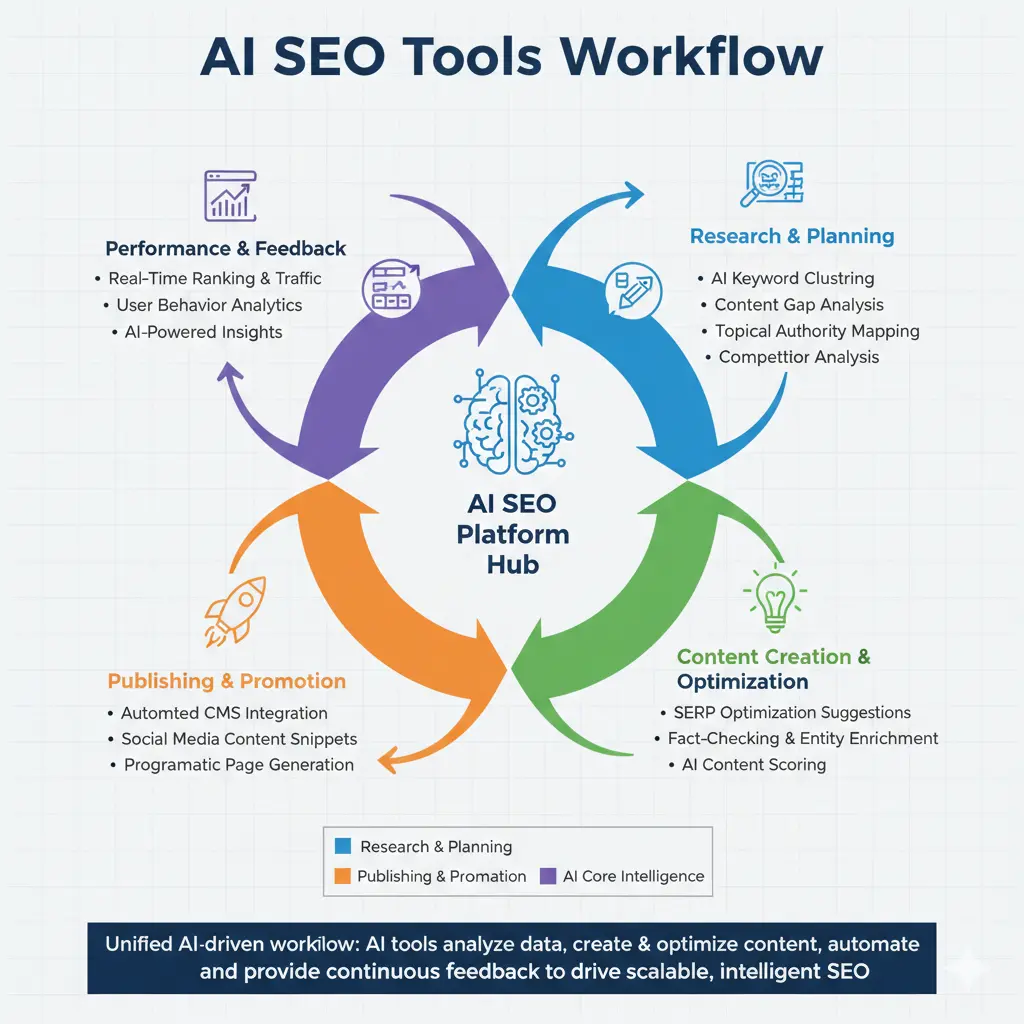
The integration of Artificial Intelligence (AI), particularly Large Language Models (LLMs), is revolutionizing the field of SEO. AI is no longer a futuristic concept but a practical tool that can automate tasks, generate insights, and even create content. This new category of AI SEO tools is rapidly evolving, with models like OpenAI’s ChatGPT, Google’s Gemini, and Anthropic’ s Claude at the forefront. AI SEO refers to the use of artificial intelligence and machine learning to enhance and automate parts of the search engine optimization process. This can range from analyzing massive datasets to find hidden ranking opportunities to generating optimized content at scale.
LLM SEO specifically involves using large language models to perform SEO tasks. For example, you can use ChatGPT to generate hundreds of title tag and meta description variations for A/B testing, brainstorm long-tail keyword ideas for a blog post, or even write schema markup code. An advanced workflow could involve feeding an LLM a list of your competitor’s top-ranking URLs and asking it to analyze the common themes, structures, and entities to create a comprehensive content brief for your own article. This level of automation and analytical power was previously unimaginable. These models can understand context and nuance, making them powerful assistants for content creation, technical optimization, and strategic planning.
This shift involves more than just content generation. AI is being integrated into all types of SEO software. For instance, AI-based optimization can now be seen in tools that predict the traffic potential of a new keyword or automatically group thousands of keywords into thematic clusters. Some platforms use AI to analyze SERP volatility, alerting you to potential Google algorithm updates before they are publicly announced. Automation is a key benefit. Repetitive tasks like generating meta descriptions for thousands of e-commerce product pages or creating monthly performance reports can now be handled by AI, freeing up SEO professionals to focus on high-level strategy and creative problem-solving. While the output of AI tools always requires human review and refinement—especially for content—their ability to accelerate workflows and uncover complex patterns in data makes them an essential component of modern, advanced SEO.
SEO Tools for Business Types
The right SEO toolkit depends heavily on the size, budget, and specific needs of the business. A local bakery has very different requirements from a multinational corporation or an online-only retailer. Understanding these distinctions is key to selecting software that provides value without being overly complex or expensive.
Small Business SEO Tools
For small businesses, the primary concerns are usually budget, ease of use, and a focus on local search. They need tools that deliver tangible results without a steep learning curve or a hefty price tag. An ideal stack often begins with Google’s free offerings: Google Business Profile (for managing local listings), Google Search Console, and Google Analytics. These provide a wealth of essential data at no cost. For an all-in-one solution, platforms like Mangools or Ubersuggest (by Neil Patel) offer a great balance of features and affordability. They provide user-friendly interfaces for keyword research, rank tracking, and basic site audits that are perfect for a business owner who might not be an SEO expert. A local plumber, for instance, could use these tools to find keywords like “emergency plumber near me,” track their ranking in the local map pack, and identify simple on-page improvements for their service pages. The focus is on practicality and immediate impact on the local level.
Enterprise SEO Tools
Enterprise-level businesses, which often manage massive websites with millions of pages and operate across multiple countries and languages, have vastly different needs. Their challenges revolve around scale, collaboration, and sophisticated data analysis. Enterprise SEO tools like BrightEdge, Conductor, and seoClarity are built to handle this complexity. These platforms offer features that go far beyond standard SEO suites. This includes things like automated page-level performance tracking, global rank tracking across hundreds of locations, advanced workflow management for large teams, and predictive forecasting to model the potential impact of SEO changes. For example, a large financial services company could use an enterprise platform to monitor the compliance of content across thousands of pages, assign tasks to different regional marketing teams, and generate customized C-suite-level dashboards that tie SEO performance directly to business revenue goals. These tools also provide dedicated account managers and support teams, reflecting their role as critical business infrastructure rather than just software.
Ecommerce SEO Tools
E-commerce websites present unique SEO challenges, such as managing thousands of product pages, dealing with faceted navigation (filters), and optimizing for transactional keywords. Their SEO tools need to be tailored to these specific issues. A technical SEO crawler like Screaming Frog is essential for e-commerce sites to manage issues like duplicate content caused by product variations (e.g., different colors and sizes) and to ensure proper indexation of category and product pages. All-in-one platforms like Ahrefs and SEMrush are also invaluable for their ability to conduct competitor analysis on a product level and identify high-intent keywords like “buy [product name] online.” Furthermore, e-commerce businesses benefit greatly from tools that specialize in structured data (Schema markup). Implementing product, review, and FAQ schema is critical for standing out in the SERPs, and tools that help generate and validate this code can provide a significant competitive edge. An online clothing retailer might use these tools to ensure their products show up with star ratings, price, and availability directly in the search results, dramatically increasing click-through rates.
Free SEO Tools vs Paid SEO Software
One of the most common questions in SEO is whether it is necessary to pay for tools. The answer depends on your goals, the scale of your projects, and the level of competition in your niche. Both free and paid tools have their place in a well-rounded SEO strategy, and understanding their respective strengths and limitations is crucial. Free SEO tools are an excellent starting point and can be surprisingly powerful. The suite of tools from Google—Search Console, Analytics, and PageSpeed Insights—is absolutely essential and provides foundational data that no paid tool can replace. There are also many “freemium” tools that offer limited functionality at no cost, such as Ubersuggest for keyword ideas, Moz’s Link Explorer for a certain number of backlink queries per month, or the free version of Screaming Frog for crawling up to 500 URLs. These are perfect for bloggers, solopreneurs, or small businesses just dipping their toes into SEO. They can help you conduct basic keyword research, track a small number of keywords, and perform simple site audits.
However, as your SEO efforts mature and you begin to compete in more challenging markets, the limitations of free tools become apparent. Paid SEO software offers several key advantages: scale, data accuracy and depth, and advanced features. For instance, while a free tool might give you a handful of keyword suggestions, a paid platform like Ahrefs or SEMrush will provide thousands, along with sophisticated filtering options and more reliable difficulty metrics. Paid tools crawl the web constantly with powerful bots, resulting in larger and more up-to-date backlink indexes. This allows for far more comprehensive competitor analysis. They also offer features simply not available in free versions, such as historical ranking data, content gap analysis, and automated, professional-looking reports. An agency managing multiple clients could not function effectively using only free tools; the ability to manage multiple projects, track thousands of keywords daily, and generate detailed progress reports is a core function of paid software.
Ultimately, the choice is not about free versus paid, but about using the right tool for the job. A smart approach is to build a foundation with the best free tools and then strategically invest in paid software to overcome specific challenges and gain a competitive edge. You might start with Google’s tools and a free keyword generator. As your site grows, you might invest in a paid rank tracker to monitor your progress more accurately. Later, you might subscribe to a full suite like SEMrush to deep-dive into competitor strategies and scale your content production. Paid SEO software is an investment, but for any business serious about driving significant revenue from organic search, the insights and efficiencies they provide deliver a return that far outweighs the cost. They allow you to move faster, make smarter decisions, and ultimately achieve better results.
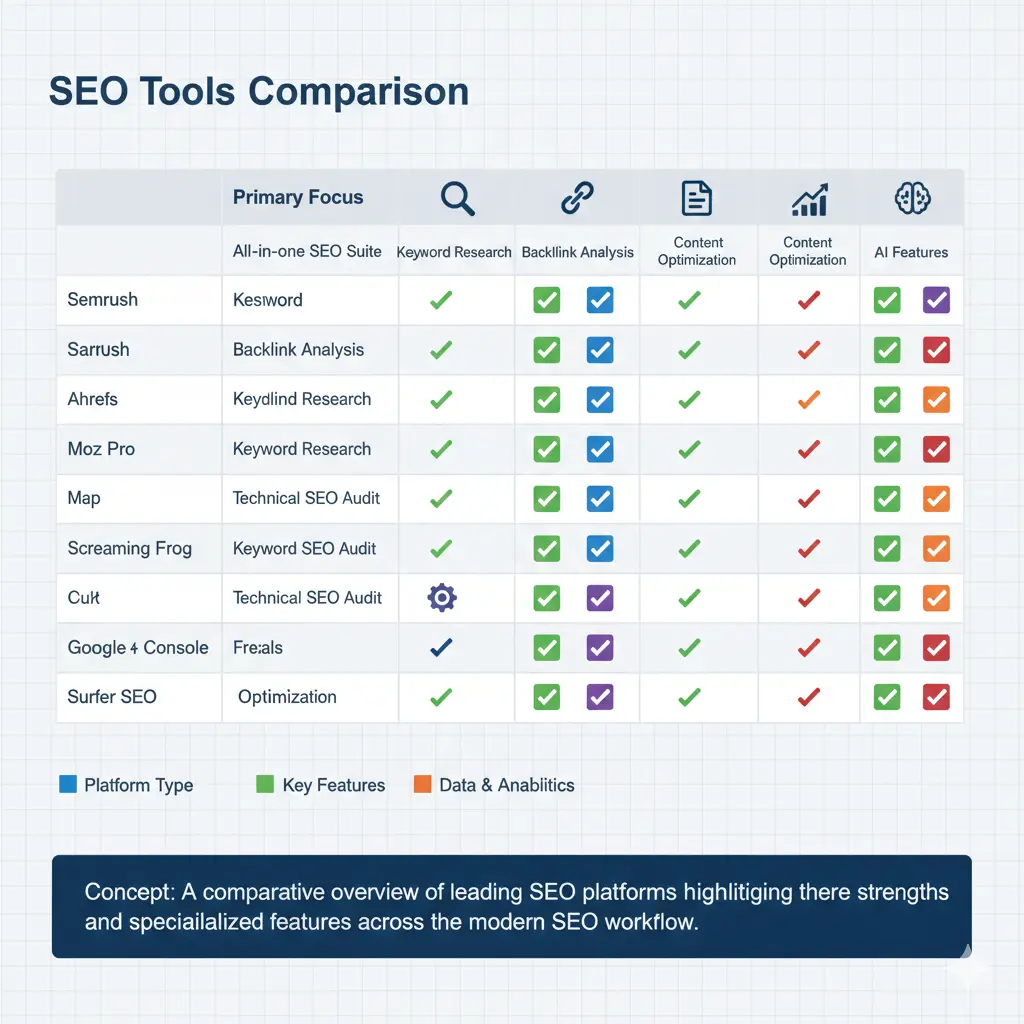
How to Choose the Best SEO Tool for Your Website
Selecting the right SEO tool from the myriad of options can be a daunting task. The best tool is not necessarily the most expensive or the one with the most features; it is the one that best aligns with your specific needs, budget, and level of expertise. The first step in the selection process is to clearly define your goals. What are you trying to achieve with SEO? Are you focused on creating content and need robust keyword research capabilities? Are you an agency that needs powerful reporting and client management features? Or are you a technical SEO consultant who requires deep crawling and log file analysis? By identifying your primary use case, you can immediately narrow down the field. A blogger, for instance, would priorities keyword and content ideation features, whereas an e-commerce manager would be more concerned with technical crawling and on-page optimization for product pages.
Once you have defined your needs, you should consider your budget and the expertise of the user. SEO tools range from free to thousands of pounds per month. Be realistic about what you can afford and the potential return on investment. For those new to SEO, an overly complex and data-heavy tool like Screaming Frog might be overwhelming and counterproductive. In this case, a more user-friendly, all-in-one platform like Moz or Mangools, which guides you through the process, would be a much better fit. Conversely, an experienced SEO professional would likely find these simpler tools too restrictive and would require the granular data and advanced features found in Ahrefs, SEMrush, or specialized technical tools. Always take advantage of free trials. Nearly every major paid SEO tool offers a free trial or a limited-access plan. Use this period to test the tool with your own website data. Evaluate the user interface: is it intuitive? Can you find the information you need easily? Assess the data quality: do the backlink profiles and keyword volumes seem accurate and comprehensive?
Finally, think about integration and scalability. Does the tool integrate with other software you use, like Google Analytics, Google Data Studio, or your project management system? This can save a significant amount of time and streamline your workflows. Also, consider your future needs. While a basic tool might suffice now, will it still be adequate in a year’s time as your website and your SEO ambitions grow? Choosing a platform that can scale with you can prevent the hassle of migrating data and learning a new system down the line. By systematically evaluating your goals, budget, expertise, and future needs, you can move beyond marketing hype and choose the SEO tool that will become a genuine asset to your digital marketing efforts, providing actionable insights that drive real growth.
How SEOJerry Uses SEO Tools
At SEO Jerry, we believe in a data-driven, results-oriented approach to search engine optimization. To achieve this, we leverage a carefully selected stack of best-in-class SEO tools that empower every stage of our process, from initial strategy to final reporting. Our toolkit is not built around a single platform; instead, we combine the unique strengths of several specialized and all-in-one tools to create a comprehensive and powerful workflow. This hybrid approach ensures we have the most accurate data and the most efficient processes for delivering exceptional results for our clients and for our own web properties. We see SEO tools as an extension of our team’s expertise—they are the instruments that allow our strategists to perform at the highest level.
Our foundational workflow begins with Ahrefs and SEMrush for strategic planning and competitive intelligence. We use these platforms for deep-dive keyword research, uncovering high-value opportunities and understanding searcher intent. Their powerful backlink analysis features are central to our off-page SEO strategies, allowing us to reverse-engineer competitor successes and identify high-authority link-building targets. For the critical task of technical SEO, Screaming Frog SEO Spider is our indispensable workhorse. We conduct exhaustive site crawls to diagnose everything from indexation issues and crawl budget waste to schema implementation errors and site speed bottlenecks. This is complemented by Google’s own suite—Search Console, Analytics, and PageSpeed Insights—which provides the ground-truth data we need to monitor performance and health directly from the source.
When it comes to content optimization and reporting, we integrate further specialized tools. Platforms like SurferSEO help us ensure our content is not just well-written but also perfectly aligned with what Google’s algorithm and users expect to see for a given query. For reporting, we build custom dashboards in Looker Studio, pulling in data from all our sources to provide clients with a transparent, holistic view of their SEO performance, connecting our activities directly to their key business metrics. Increasingly, we are also integrating AI SEO tools into our workflow to automate repetitive tasks and accelerate data analysis, allowing our human experts to focus on what they do best: strategy, creativity, and complex problem-solving. This curated, multi-tool approach ensures that every recommendation we make and every action we take is backed by robust, accurate, and comprehensive data.
SEO Tools FAQs
For a beginner, the most essential tools are the free ones provided by Google: Google Search Console, Google Analytics (GA4), and Google Business Profile (if you have a local business). These provide a wealth of fundamental data. Beyond that, a user-friendly, affordable all-in-one tool like Ubersuggest or Mangools can be a great starting point for keyword research and basic site health checks without being overwhelming.
While you can implement some basic SEO best practices without tools (like writing good content and using clear headings), it is nearly impossible to run an effective, competitive SEO campaign without them. You would have no way to conduct keyword research, analyse competitors, find technical errors on your site, track your rankings, or measure your results. SEO is a data-driven discipline, and the tools provide that data.
No, Domain Authority (DA) is a metric created by the SEO tool company Moz to predict a website's ranking potential. It is not used by Google in its algorithms. While it can be a useful comparative metric to gauge the relative strength of two different websites, it should not be treated as an absolute measure of quality or a direct ranking factor.
This varies dramatically based on your needs. You can start for free using Google's tools. Small businesses or solopreneurs might spend £50-£150 per month for a solid all-in-one platform. Agencies and larger businesses often spend £500 to several thousands of pounds per month on a combination of enterprise-level suites, specialised tools, and multiple user licenses.
AI tools like ChatGPT can be excellent assistants for content creation, but they should not be used to write entire articles without human oversight. They are powerful for brainstorming ideas, creating outlines, generating meta descriptions, and writing drafts. However, the final content should always be edited, fact-checked, and refined by a human expert to ensure accuracy, originality, and alignment with your brand's unique voice and perspective.